
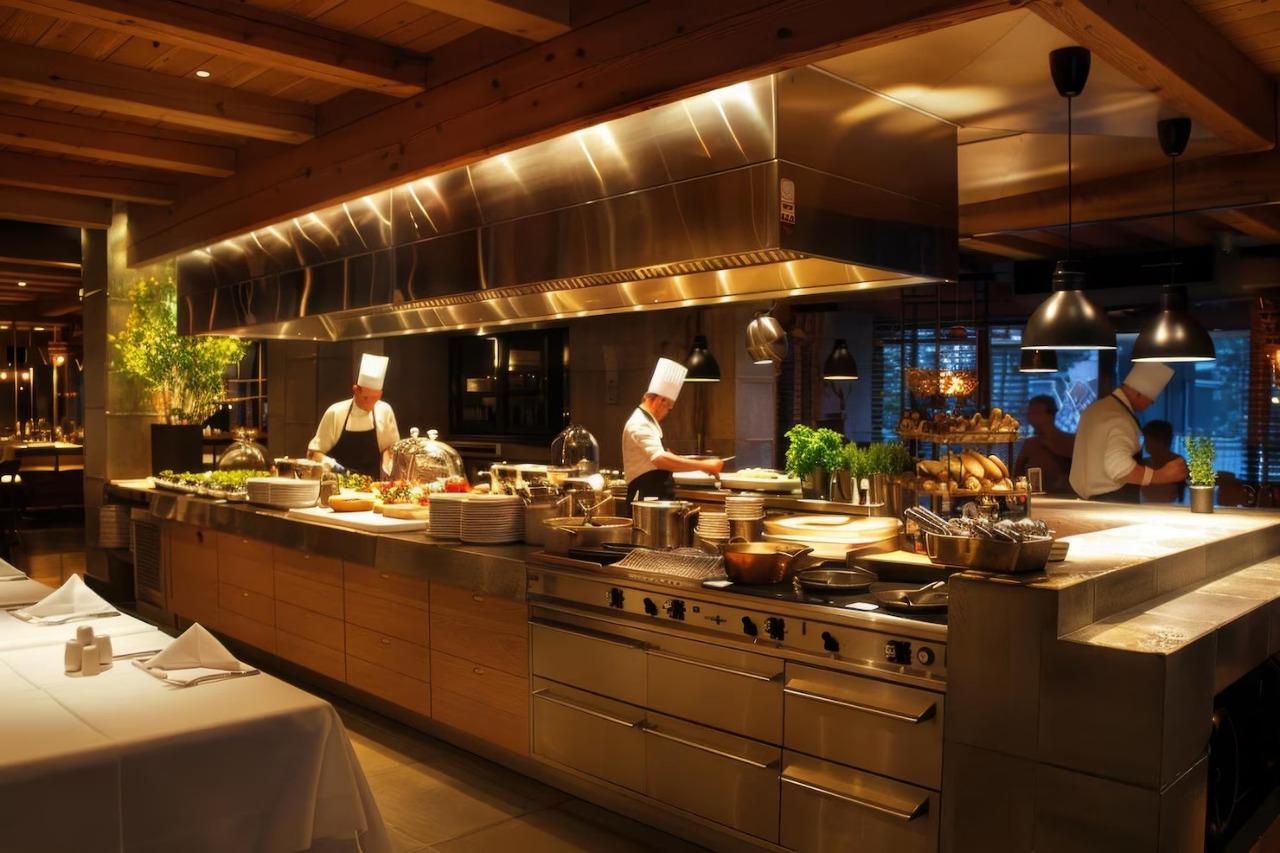
The real challenge of managing a multi-cuisine kitchen isn’t the menu, but it’s getting completely different cooking styles to share one kitchen without getting in each other’s way. Every cuisine on the menu brings its own equipment, its own preparation rhythm, and its own pace of cooking. And all of this has to run at the same time, from the same floor and during the same service.
A good multi-cuisine restaurant kitchen setup is built around that reality instead of ignoring it. The goal is a kitchen that holds up whether it’s a slow weekday lunch or a packed weekend dinner, where every station can do its job without waiting on another one to clear out first.
What Makes a Multi-Cuisine Restaurant Kitchen Unique?
A single-cuisine kitchen can standardise almost everything: one style of cooking equipment, one storage rhythm, one prep pattern repeated across the menu. A multi-cuisine kitchen doesn’t get that. A Chinese cuisine station needs high-flame burners and quick access to sauces. A tandoor needs its own ventilation and heat management. All of it has to work from the same production space at the same time.
The ingredients side gets more complex too. Marination for an indian dish and dough for pizza bases rarely overlap, so each usually needs its own station, its own tools, and often its own storage to avoid cross-contamination or flavour transfer.
Multiple cooking methods fire at once during service, raw ingredients need to stay properly segregated, and staff trained in different culinary styles have to share a kitchen without constantly crossing each other’s paths. Good multi-cuisine kitchen design plans for this from day one instead of trying to fix it once the kitchen is already built.
Key Planning Considerations Before Setting Up a Multi-Cuisine Kitchen
Before any equipment gets ordered or a layout gets finalised, a few decisions need to be locked in. Skipping this stage of restaurant kitchen planning is one of the most common reasons kitchens end up cramped or inefficient within months of opening.
Here’s what typically needs to be worked out early:
Menu Complexity
The number of cuisines and dishes on the menu directly decides how many cooking stations, how much prep space, and how many specialised tools the kitchen will need. A tightly curated menu across three cuisines needs a very different setup than an extensive menu trying to cover five or six.
Expected Customer Volume
Covers per service and peak-hour order volume decide equipment capacity, station sizing, and how many staff need to work at each station simultaneously. Underestimating this at the planning stage usually shows up later as bottlenecks during rush hours.
Dine-In vs Delivery Requirements
A kitchen serving mostly dine-in guests can plan around table turnaround times, while one with heavy delivery volume needs faster packing stations and different plating logistics. Many restaurants today run both, which changes how the pass and packing areas need to be arranged.
Space Availability
The available floor area sets a hard limit on how many stations and how much equipment the kitchen can realistically fit without compromising staff movement. Planning around actual dimensions, rather than an ideal equipment list, prevents an overcrowded kitchen later.
Future Expansion Plans
A kitchen designed only for today’s menu can become a constraint the moment a new cuisine or dish category gets added. Leaving some flexibility in utility points and floor space during the initial commercial kitchen setup makes future changes considerably less disruptive.
How to Plan the Workflow of a Multi-Cuisine Restaurant Kitchen
Workflow in a multi-cuisine kitchen has to account for multiple parallel processes without letting any of them interfere with each other. Getting this sequence right is the difference between a kitchen that runs smoothly under pressure and one that grinds to a halt during peak hours.
Here’s how that flow typically breaks down:
Receiving and Storage
Deliveries should reach storage without crossing prep or cooking areas, and raw ingredients for different cuisines, especially meat, seafood, and vegetables, need clearly separated storage to avoid cross-contamination. This is also where FSSAI expects visible segregation during an inspection.
Preparation and Pre-Preparation
Each cuisine’s prep work, marination, chopping, batter-making, dough preparation, ideally happens on its own dedicated surface rather than a shared one. Sharing prep counters across cuisines is one of the more common causes of delays and cross-contamination risk in multi-cuisine kitchens.
Cuisine-Specific Cooking Stations
Grouping cooking equipment by cuisine or by heat type, rather than scattering it around the kitchen, keeps each culinary team working in a defined zone. A tandoor station, a Chinese wok section, and a Continental grill line each function better with their own compact footprint.
Plating and Service Pass
The pass should have a clear line of sight to every cooking station feeding into it, since this is where dishes from different cuisines come together before reaching the table. A pass that’s too far from any one station usually means food arriving cold or orders getting delayed.
Dishwashing and Waste Flow
Dirty dishes and kitchen waste need a path that doesn’t cross back through prep or cooking zones, both for hygiene and for staff movement. A multi-cuisine kitchen generates more variety in waste and used equipment, which makes this flow even more important to plan properly.
Essential Equipment for a Multi-Cuisine Restaurant Kitchen
The equipment list for a multi-cuisine kitchen is naturally longer and more varied than a single-cuisine setup, but that doesn’t mean buying one of everything. Choices here should follow the menu and workflow decided during the setup process, not the other way around.
Here’s what most multi-cuisine kitchens need to plan around:
Preparation Equipment
Cutting, chopping, mixing, and dough preparation tools vary significantly across cuisines, from vegetable slicers to dough kneaders to spice grinders. Multi-cuisine restaurant equipment at this stage should match the specific techniques each cuisine on the menu actually requires.
For a multi-cuisine kitchen, we recommend preparation equipment that can support high-volume ingredient handling while keeping different preparation tasks organised. Some suitable options from Alister include:
- Stainless Steel Work Table With Sink
The work table combines a preparation surface with an integrated sink, making it suitable for washing and preparing ingredients within the same work area. Its splash-back also helps maintain a cleaner preparation environment.
- Indian Vegetable Cutting Machine
Designed for high-volume vegetable preparation, the cutting machine has six different blades and a stated capacity of up to 200 kg per hour. Its stainless-steel body and blades make it suited to demanding commercial kitchen operations.
- Tilting Wet Grinder 50 Ltrs
With a 50-litre bowl and 5 HP motor, the wet grinder is designed for preparing larger quantities of batters, pastes, and other wet preparations. The tilting design also makes it easier to transfer the prepared mixture.
Cooking Equipment
This is usually the most cuisine-specific category, spanning tandoors, deep fryers, griddles, combi ovens, and pizza ovens depending on what’s on the menu. Grouping these by heat type and fuel source also affects ventilation planning and utility layout.
A multi-cuisine cooking station may need to accommodate everything from tandoori preparations to frying and combination cooking. These options by us are suited to different requirements within this zone:
- Hotline Electric Tandoor
The compact electric tandoor features a timer, heater selector switch, heavy grill, and see-through window, making it suitable for tandoori and other high-heat preparations.
- Aceplus Standing Electric Deep Fryer
With a 28-litre capacity, two baskets, and a temperature range of up to 190°C, this deep fryer is designed for high-volume frying during restaurant service.
- Electric Combi Oven
The five-tray combi oven supports convection, direct steam, and combination cooking, giving multi-cuisine kitchens greater flexibility across different preparation methods. It also includes an integrated automatic washing system.
Refrigeration and Cold Storage
Separate refrigeration for raw meat, seafood, and vegetables isn’t optional in a multi-cuisine kitchen serving both vegetarian and non-vegetarian food; it’s a basic hygiene requirement.
For a busy multi-cuisine setup, having both bulk storage and refrigeration close to key work areas can make everyday operations much smoother. Here are options from Alister:
- Undercounter Refrigerator
With a 490-litre capacity and three doors, the undercounter refrigerator can keep frequently used ingredients close to the preparation or cooking stations.
- Western Chest Freezer
The 536-litre chest freezer provides dedicated frozen storage, with four baskets and a temperature range below -17°C. It can be useful for storing frozen ingredients in larger quantities.
Holding and Service Equipment
Bain-maries, hot cases, and holding cabinets keep prepared food at safe temperatures during service without further cooking it, which matters more when multiple cuisines are being plated at different speeds. This equipment also smooths out timing mismatches between faster and slower-cooking dishes.
Once food is ready, the right holding equipment helps keep service running smoothly while dishes wait to be served. A few useful options from us include:
- SS Service Bain Marie
This bain marie provides space to keep multiple prepared dishes warm and ready for service. The sneeze guard also adds an extra layer of hygiene when food is kept in an open service area.
- Hotline Food Warmer Vault
The 50-litre food warmer can be used to keep prepared food warm during service, especially when dishes need to be held before serving.
- Electric Soup Kettle
This soup kettle is useful for keeping soups, gravies and other liquid dishes warm and ready to serve without needing to reheat them repeatedly.
Washing and Hygiene Equipment
Dishwashers, sinks, and sanitising stations need enough capacity to handle the wider variety of crockery, cookware, and utensils a multi-cuisine menu generates. A single small sink setup that works for a focused menu often becomes a bottleneck once the menu expands.
For a multi-cuisine setup, these options from us can help keep washing and cleaning organised:
- Winterhalter Under Counter Dishwasher
A compact dishwasher suited to busy kitchens where plates, glasses and utensils need to be cleaned quickly between services. Its under-counter design also makes it easier to fit into a limited washing area.
- SS Three Sink Unit
This three-sink unit provides a practical space for washing and rinsing kitchenware. The splash-back helps keep the surrounding work area cleaner during regular use.
- Dual Glass Rinser
A dual glass rinser makes it easier to quickly rinse glasses during service, helping the bar or beverage station keep up when there is a steady flow of orders.
How to Optimize Workflow in a Multi-Cuisine Kitchen
Even a well-planned layout needs ongoing attention once the kitchen is operational. Small adjustments to how staff and stations interact often make a bigger difference than adding more equipment.
Some of the areas worth focusing on:
Reducing Staff Movement
Positioning frequently used tools, ingredients, and equipment within easy reach of each station cuts down on unnecessary walking during service.
Preventing Cross-Traffic Between Stations
Staff paths between different cuisine stations should avoid crossing each other, particularly where raw ingredients or hot equipment are involved.
Managing Peak Service Hours
Having a clear plan for which stations handle overflow orders during rush hours prevents any single cuisine section from becoming a bottleneck for the whole kitchen.
Improving Communication Between Kitchen Sections
A clear system for calling out orders and coordinating timing between cuisine stations keeps dishes for the same table arriving together rather than staggered.
Balancing Speed and Food Quality
Pushing for faster ticket times shouldn’t come at the cost of proper cooking technique, especially for cuisines like tandoor or wok cooking where timing directly affects the final dish.
Common Challenges in Multi-Cuisine Restaurant Operations
Even with good planning, multi-cuisine kitchens run into a fairly predictable set of problems once they’re operational. Knowing what to watch for makes it easier to catch these early.
These are the issues that come up most often:
Kitchen Congestion
Too many stations packed into limited space slows staff movement and increases the risk of accidents during busy service.
Delayed Order Fulfilment
When cooking times vary widely across cuisines, orders for the same table can end up arriving at noticeably different times if timing isn’t coordinated.
Inadequate Storage Capacity
A menu that grows faster than the kitchen’s storage capacity leads to overcrowded refrigeration and increases the risk of improper segregation between ingredients.
Equipment Overutilization
Popular cuisine sections often see heavier use than others, which puts uneven wear on specific equipment and increases the chance of breakdowns during peak periods.
Maintaining Consistency Across Menu Categories
With different chefs or teams often handling different cuisines, keeping portion sizes, plating, and taste consistent across the entire menu takes deliberate effort and clear standard recipes.
Food Safety Considerations for a Multi-Cuisine Kitchen
Food safety gets more complicated in a multi-cuisine kitchen simply because there’s more variety to manage. Raw meat, seafood, and vegetables need clearly separated storage and prep surfaces, and this segregation is something FSSAI inspectors specifically look for in kitchens handling both vegetarian and non-vegetarian food.
Cross-contamination risk also rises when multiple cuisines share equipment, cutting boards, or storage space without clear protocols. Colour-coded chopping boards, dedicated utensils per station, and clearly labelled storage help keep this manageable, and building these habits into daily routine matters more in a multi-cuisine kitchen than in one working with a narrower menu.
Why Professional Kitchen Planning Matters
A lot of the problems that show up months into a multi-cuisine restaurant usually trace back to decisions made before the kitchen was even built. Getting the layout, equipment list, and workflow right at the planning stage is considerably easier and cheaper than retrofitting a kitchen that’s already operational.
This is where working with people who understand commercial kitchen design specifically for food-service operations makes a real difference, since a layout that looks reasonable on paper doesn’t always hold up once real order volumes and multiple cuisines are running through it simultaneously. Getting input on kitchen workflow before finalising equipment purchases tends to prevent a lot of the rework restaurants otherwise deal with later.
Conclusion
A multi-cuisine restaurant kitchen has more moving parts than most food-service setups, simply because it’s running several distinct cooking styles from one space. Getting the layout, equipment, and workflow right from the start makes the difference between a kitchen that handles this complexity smoothly and one that struggles with it every service.
None of this depends on having unlimited space or budget. It comes down to planning around the actual menu, the expected volume, and how food and staff need to move through the kitchen, rather than assembling equipment first and figuring out the layout later.
Alister works with restaurants, hotels, cloud kitchens, and other food-service businesses on exactly this kind of kitchen setup, from equipment selection to layout considerations for multi-cuisine operations. The goal stays the same throughout: a kitchen built around how the restaurant actually plans to cook and serve, not a generic template applied regardless of menu.