
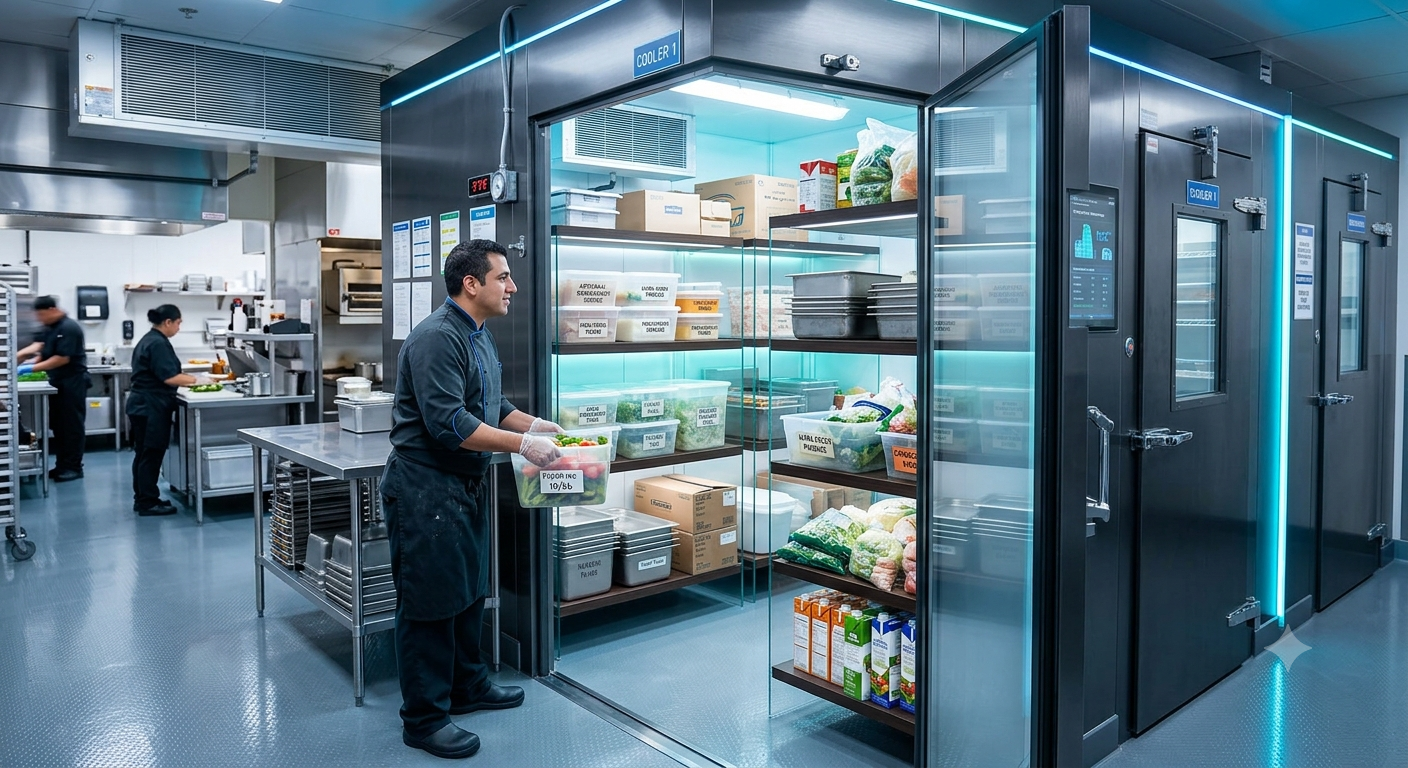
Refrigeration is one of the most important parts of a commercial food operation. From storing fresh vegetables and dairy products to keeping prepared food, meat and frozen ingredients at the right temperature, reliable refrigeration supports almost every stage of food service.
A refrigeration system also has to do more than simply keep food cold. It needs to maintain stable temperatures, handle frequent opening and closing, fit into the available kitchen space and support the volume of food being stored. The right system can also make daily operations more organised and help reduce food waste.
For restaurants, hotels, bakeries, cloud kitchens, and other food service facilities, choosing suitable commercial refrigeration systems is therefore an operational decision as much as an equipment purchase.
This guide explains the main types of commercial refrigeration equipment, where they are used, how to choose the right system and what businesses should consider when maintaining their refrigeration setup.
What Are Commercial Refrigeration Systems?
Commercial refrigeration systems are designed for professional food service environments such as restaurants, hotels, bakeries and cafés. They handle larger storage volumes and frequent use compared with domestic refrigerators, with options including reach in refrigerators, undercounter units, freezers and blast chillers.
Their main purpose is to maintain safe and consistent temperatures for perishable food. FSSAI guidance recommends keeping high-risk chilled food at or below 5°C and frozen food at -18°C or below, along with proper food segregation and stock rotation.
Why Commercial Refrigeration Is Essential for Food Businesses
Food Safety Compliance
Temperature control is a fundamental part of food safety. Perishable foods can become unsafe when they remain at unsuitable temperatures for extended periods.
A properly selected refrigeration system helps businesses maintain the temperature conditions required for different food products. However, the equipment itself is only one part of the process. Staff need to monitor temperatures, store products correctly and respond quickly if a unit develops a problem.
FSSAI food safety guidance also emphasises appropriate cold storage, segregation of raw and prepared food and maintaining suitable storage temperatures.
Product Freshness and Quality
Refrigeration helps slow deterioration and preserve the quality of ingredients. Fresh produce, dairy, meat, seafood and prepared foods all have different storage requirements, making temperature consistency important.
For food businesses, maintaining the right conditions can help preserve texture, appearance and overall product quality throughout the expected storage period.
Inventory Management
Good refrigeration makes it easier to organise inventory according to food type, shelf life and frequency of use.
A well-planned system allows staff to see what is available, separate different categories of food and rotate stock efficiently. Practices such as FIFO and FEFO can further help reduce products being forgotten at the back of a refrigerator.
Operational Efficiency
The location and type of refrigeration equipment can have a direct impact on kitchen workflow.
An undercounter refrigerator near a preparation station, for example, allows frequently used ingredients to remain within easy reach. Larger upright refrigerators can handle bulk storage, while dedicated freezers can be used for frozen products.
This reduces unnecessary movement around the kitchen and helps staff work more efficiently during busy service periods.
Reduced Food Waste
Poor temperature control, overcrowding, forgotten stock and equipment failures can all contribute to food waste.
A suitable refrigeration system, combined with proper storage and inventory practices, gives businesses better control over their perishable stock and can reduce avoidable losses.
Types of Commercial Refrigeration Systems
Different food businesses have different refrigeration requirements. A restaurant may need easy access to ingredients during service, while a bakery may require dedicated equipment for cakes and other chilled products. The right commercial refrigeration equipment depends on storage needs, available space, workflow and the type of food being handled.
Reach-In Refrigerators and Freezers
Reach-in refrigerators and freezers are upright units designed for convenient access to chilled and frozen ingredients. They are commonly used in restaurants, hotels, bakeries, cafés and other commercial kitchens where ingredients need to be accessed frequently.
Their vertical design provides good storage capacity while using less floor space than larger walk-in systems, making them practical for everyday kitchen operations.
Alister products:
- Reach-In Refrigerator GN 1350 TNM: A high-capacity upright refrigerator suited to commercial kitchens that need organised chilled storage for larger quantities of ingredients.
- Reach-In Refrigerator STF 550 TNM: A compact reach-in option for kitchens that need accessible refrigeration without taking up excessive floor space.
- Double Temperature Reach-In Cabinet G 550 DTV: Designed to provide two temperature zones, making it suitable for operations that need separate chilled and frozen storage in one unit.
Undercounter Refrigeration Units
Undercounter refrigerators fit below worktops and preparation counters, making them useful where kitchen space is limited. They keep frequently used ingredients close to the workstation, reducing unnecessary movement during food preparation and service.
These units are commonly used in restaurants, cafés, bars and food preparation areas where quick access to ingredients is important.
Alister products:
- Glass Door Undercounter G 2100 TNG: An undercounter refrigeration unit with a glass door that allows staff to view stored products easily while making efficient use of available space.
- Hoshizaki SS Undercounter Chiller 6 Drawers RTDW 137 MS4 33: A six-drawer chiller that provides organised storage and convenient access to ingredients at preparation stations.
- Elanpro SS Undercounter Chiller 6 FT: A longer undercounter chiller designed to provide additional refrigerated storage while fitting beneath a working counter.
Display Refrigerators
Display refrigerators are designed to keep chilled products at controlled temperatures while keeping them visible to customers. They are particularly useful for bakeries, cafés and food outlets displaying cakes, desserts, beverages and ready-to-serve products.
The combination of refrigeration and product visibility makes these units useful where presentation and easy product selection are part of the customer experience.
Alister products:
- Elanpro Refrigerated Cake Display Curved Glass 4 FT:: A refrigerated showcase for displaying cakes, pastries and other chilled desserts while maintaining the required storage temperature. Its straight-glass design provides clear product visibility.
- Western Ambient Display Showcase 3 FT Straight Glass PTW 09 AN: A straight-glass display showcase suited to presenting products where refrigeration is not required.
- Imported 4 FT Straight Glass Refrigerated Cake Display: A refrigerated cake display that combines chilled storage with a clear straight-glass presentation area.
Blast Chillers
A blast chiller rapidly brings down the temperature of freshly prepared food, making it different from standard refrigeration equipment used for chilled storage. It is particularly useful for commercial kitchens that prepare food in batches and need to cool it efficiently before storage or further processing.
Blast chillers are commonly used in hotels, catering facilities, central kitchens, bakeries and other high-volume food production environments.
Alister products:
- Blast Chiller Freezer BCF 5: A compact blast chilling and freezing solution for commercial kitchens requiring rapid cooling and freezing capabilities.
- Trufrost Blast Chiller Shock Freezer BCF 10: Designed for higher-volume operations that need rapid chilling and shock freezing for prepared foods.
- Celfrost Blast Chiller Shock Freezer D3: A professional blast chilling and shock freezing unit suited to commercial food production and batch preparation.
Vertical Chillers
Vertical chillers are upright refrigeration units designed for organised storage of fresh and chilled ingredients. They are commonly used in restaurants, hotels, bakeries and large commercial kitchens where substantial refrigerated storage is needed without using a walk-in cooler.
Alister products:
- Hoshizaki SS Four Door Vertical Chiller HRW 127 MS4: A four-door vertical chiller designed for high-volume chilled storage and easy organisation of ingredients.
- Hoshizaki SS Two Door Vertical Combi Chiller Freezer HRFW 77 MS4: A combination unit that provides both chilled and frozen storage, making it useful for kitchens with varied refrigeration requirements.
- Hoshizaki SS Premium Two Door Vertical Chiller HRWP77LS3 GN: A premium two-door chiller designed for professional kitchens requiring reliable and organised refrigerated storage.
Chest Freezers
Chest freezers provide dedicated frozen storage with a top-opening design. They are useful for restaurants, cafés, catering businesses and other food operations that need to store frozen ingredients or products in larger quantities.
Alister products:
- Celfrost Chest Freezer 322 Ltr: A medium-capacity chest freezer suitable for commercial kitchens requiring additional frozen storage.
- Western Chest Freezer 536 Litres F550 GT25: A high-capacity option for businesses that handle larger quantities of frozen food and need substantial storage space.
- Western Chest Freezer 536 Liters F550 GT25: With a 536-litre capacity, this chest freezer is suitable for businesses requiring substantial frozen storage. Its four baskets help keep frozen ingredients organised and accessible.
- Coldwave Chest Freezer 100 Ltr: A smaller-capacity option for businesses that need dedicated frozen storage while working with limited space.
Cold Rooms and Walk-In Refrigeration
For businesses that need more refrigerated or frozen storage than standalone units can provide, cold rooms offer a scalable solution. They are suitable for restaurants, hotels, catering operations, supermarkets, food production facilities and other businesses that handle large quantities of temperature-sensitive products.
Alister also designs and supplies cold room solutions based on the storage volume, temperature requirements, available space and operational needs of the business. Cold rooms can be planned for chilled or frozen storage and configured to make better use of the available area while providing organised access to stored products.
Choosing the Right Refrigeration System for Your Business
Buying refrigeration based only on capacity or price can create problems later. The equipment should be selected around the way the kitchen actually operates.
Storage Capacity Requirements
Start by estimating the amount of food that needs to be stored during normal operations and peak periods.
A small café may need undercounter refrigeration and a compact upright unit, while a hotel or catering facility may require multiple refrigerators, freezers and dedicated cold rooms.
Avoid choosing a unit that is too small simply because it costs less. Consistently overcrowding refrigeration can affect airflow, organisation and temperature management.
Type of Food Operation
The refrigeration requirements of a bakery are different from those of a restaurant, hotel or cloud kitchen.
Consider the types of ingredients used, how frequently they are accessed, whether food is prepared in batches and whether the operation handles large quantities of frozen products.
This helps determine whether you need restaurant refrigeration systems, preparation refrigeration, dedicated freezing equipment or larger cold storage.
Available Space
Kitchen space is often limited, so equipment dimensions and placement need to be considered before purchase.
Measure the available area and account for door opening, ventilation, staff movement and cleaning access. Refrigeration should support the kitchen workflow rather than create an obstruction.
Energy Efficiency Considerations
Refrigeration equipment operates for long periods, making energy consumption an important consideration.
When comparing equipment, look beyond the initial purchase price. Energy efficiency, insulation, compressor performance, temperature control and maintenance requirements can all influence the long-term operating cost.
Future Expansion Plans
A growing food business may eventually need more storage capacity.
If expansion is expected, consider whether the refrigeration layout can accommodate additional equipment or whether the existing system can be scaled. Planning ahead can prevent expensive changes later.
Commercial Refrigeration Applications Across Industries
Restaurants and Cafés
Restaurants require refrigeration throughout the kitchen. Ingredients may need to be stored before service, prepared ingredients kept chilled and frozen products maintained separately.
This makes commercial kitchen refrigeration an important part of kitchen planning. Reach-in units, undercounter refrigerators, preparation counters and freezers can be combined according to the menu and kitchen layout.
Hotels and Resorts
Hotels often operate multiple food service areas, including restaurants, banquet kitchens, room service operations and pastry sections.
Their refrigeration requirements can therefore range from undercounter units to large walk-in coolers and freezers.
Bakeries and Pastry Production
Bakeries work with ingredients such as dairy, cream, eggs, chocolate, fruit and prepared fillings that may require controlled storage.
Blast chillers and dedicated refrigeration can also be valuable where products are produced in batches and need to be cooled or stored before finishing and service.
Cloud Kitchens
Cloud kitchens generally have limited physical space but may handle high order volumes.
Compact refrigeration, undercounter units and strategically positioned reach-in refrigerators can help keep ingredients close to preparation stations without consuming unnecessary floor space.
Corporate Cafeterias
Corporate cafeterias need to manage regular meal production for a large number of people. Refrigeration may be required for raw ingredients, prepared food, beverages and bulk storage.
The right combination of equipment helps separate storage requirements and maintain a more organised production workflow.
Hospitals and Institutional Kitchens
Hospitals, schools and other institutional kitchens have strict food handling requirements and may prepare food in large quantities.
Reliable refrigeration is important for storing perishable ingredients, prepared meals and specialised food products while maintaining appropriate temperature control.
Airline Catering Facilities
Airline catering involves large-scale food preparation, controlled storage and careful movement of food before it reaches the aircraft.
Refrigeration plays an important role throughout this process, particularly where meals are prepared in advance and need to remain within controlled temperature conditions during storage and handling.
Common Challenges in Commercial Refrigeration Management
Even good refrigeration equipment can perform poorly when it is incorrectly used or poorly maintained.
Temperature Fluctuations
Frequent door opening, overloading, blocked airflow, poor door seals or equipment faults can cause temperature fluctuations.
Regular monitoring helps identify problems before they result in significant product loss.
Improper Storage Practices
Refrigeration works best when food is stored correctly. Overloading shelves, blocking air circulation or mixing incompatible products can affect cooling performance and food safety.
Raw and cooked foods should also be properly separated. FSSAI guidance recommends separating raw meat and poultry from other foods and using appropriate storage arrangements.
High Energy Consumption
Commercial refrigeration can become a significant operating expense when equipment is old, poorly maintained or used incorrectly.
Leaving doors open unnecessarily, allowing condenser coils to become dirty or operating equipment in unsuitable conditions can increase the workload on the refrigeration system.
Equipment Downtime
A refrigeration failure can quickly become a business problem when large quantities of perishable food are involved.
For this reason, businesses should have a clear response plan for equipment failures and avoid waiting until a breakdown occurs before arranging service.
Maintenance Neglect
Minor refrigeration issues can become more expensive when they are ignored.
Unusual sounds, temperature changes, excessive frost, water leakage or damaged door gaskets should be treated as warning signs rather than normal operating conditions.
Best Practices for Maintaining Commercial Refrigeration Systems
Good maintenance extends beyond simply repairing a refrigerator after it stops working. Preventive care helps keep equipment operating reliably and can identify problems before they affect food storage.
Regular Cleaning
Clean internal surfaces, shelves and storage areas regularly. Spills and food residue should be removed promptly to maintain hygienic storage conditions.
Temperature Monitoring
Temperature should be checked regularly rather than assuming the equipment is operating correctly.
Digital monitoring systems can make this easier, particularly for larger kitchens with multiple refrigeration units.
Preventive Maintenance
Commercial refrigeration equipment should be inspected periodically for components such as compressors, fans, thermostats, electrical connections and refrigeration circuits.
Preventive maintenance can help identify wear before it becomes a major failure.
Door Seal Inspections
Damaged or loose door gaskets can allow cold air to escape and make the refrigeration system work harder.
Inspect seals regularly and replace damaged gaskets when required.
Condenser Maintenance
Condenser coils need to remain clean and free from excessive dust and debris. Restricted airflow can reduce refrigeration efficiency and increase the load on the system.
The maintenance schedule should follow the equipment manufacturer’s recommendations and the operating environment.
Staff Training
Kitchen staff should understand basic refrigeration practices, including keeping doors closed, avoiding unnecessary overloading, maintaining food segregation and reporting equipment issues promptly.
Good staff practices can make a significant difference to the performance and lifespan of refrigeration equipment.
Consider an AMC for Commercial Refrigeration Equipment
For businesses operating several refrigeration units, an Annual Maintenance Contract (AMC) can provide a more structured approach to preventive servicing.
Instead of relying entirely on breakdown repairs, an AMC can help schedule routine inspections and maintenance. This can be particularly useful for restaurants, hotels, institutional kitchens and other operations where refrigeration downtime can quickly affect food inventory and daily service.
Emerging Trends in Commercial Refrigeration
Commercial refrigeration is becoming increasingly connected and energy-conscious. Businesses are looking for systems that provide better monitoring, improved efficiency and greater visibility into equipment performance.
- Smart Monitoring Systems
Modern monitoring solutions can provide information about equipment temperature and operating conditions. This allows kitchen managers to identify temperature changes more quickly.
- IoT-Enabled Refrigeration
Connected refrigeration systems can integrate sensors and digital monitoring tools to provide data remotely. This can be useful for larger operations managing several refrigeration units across different areas.
- Energy-Efficient Technologies
Energy efficiency is becoming an important consideration as food businesses look for ways to control operating costs.Better insulation, improved components, efficient compressors and smarter temperature controls can all contribute to more efficient refrigeration.
- Sustainable Refrigerants
The refrigeration industry is also moving towards refrigerants with lower environmental impact. Businesses planning new installations should consider the refrigerant used by the equipment and relevant regulatory requirements.
- Integrated Cold Chain Management
For larger food operations, refrigeration is increasingly being considered as part of the wider cold chain rather than as isolated equipment.Storage, preparation, transportation and distribution all need to maintain appropriate temperature conditions. Better monitoring and connected systems can help businesses manage this process more consistently.
Conclusion
Refrigeration is an important investment for any food service operation. The right system helps keep perishable ingredients at the right temperature, maintain food safety, organise inventory and keep kitchen operations running smoothly.
There is no single refrigeration setup that works for every business. A café may need an undercounter unit and reach in refrigerator, while a hotel, central kitchen or catering facility may require vertical chillers, freezers and blast chillers. The right commercial refrigeration solutions depend on factors such as storage capacity, food type, available space, operating volume and future requirements.
At Alister, we start by understanding your kitchen requirements, storage needs, available space and daily workflow. Based on these factors, our team can consult with you and recommend suitable commercial refrigeration equipment for your operation. This helps you choose refrigeration systems that fit the way your kitchen works and the amount of food you need to store.