
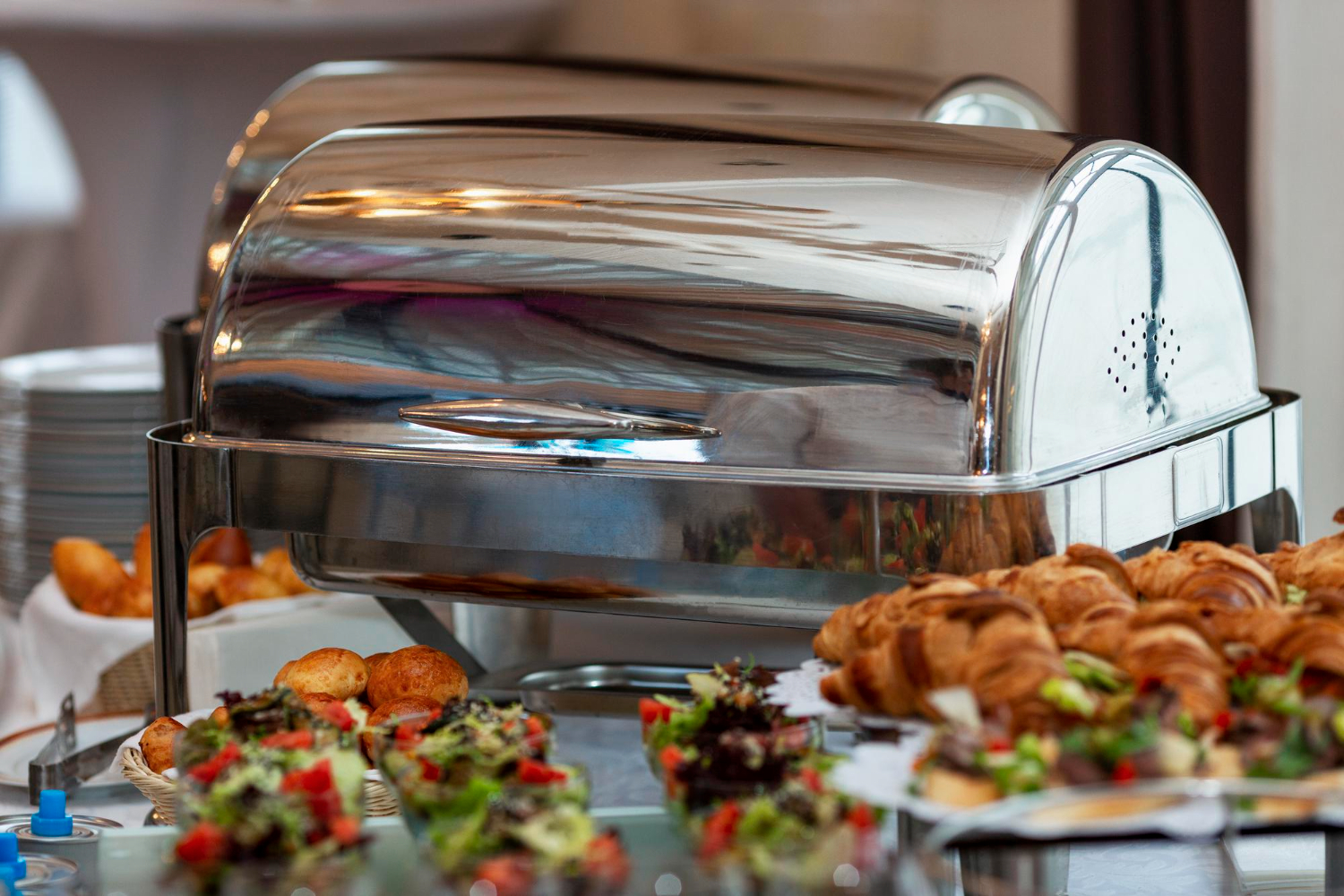
Wedding and festive season changes how a catering kitchen runs. Orders stack up, buffets are set well before guests arrive, and food that left the stove hot at 6 pm still has to be at its best at 9. Keeping it that way is the job of food warmers, and it is easy to underestimate until a buffet line goes lukewarm.
This guide covers the main types of food warming equipment, how to match each one to your menu, and what to check before buying. It also looks at the food safety side and how to prepare your operation before the rush, so you can plan around real service conditions.
Why Hot Holding Matters During Wedding & Festive Catering
Cooking is only half the job at a wedding. Food is often prepared in one place, transported, and then held for an hour or more while guests arrive, speeches run long, and buffet counters open in waves. When the equipment cannot keep temperature steady, quality drops first: gravies thicken, rice dries out, and fried items turn soft.
There is a safety side too, since food that sits warm but not hot enough is a risk, and festive volumes make it harder to watch every tray. Good food holding equipment lets your team cook ahead, serve in rounds, and replenish without rushing. It also protects the food you have already spent time and money on.
What Is Hot Holding and How Is It Different From Cooking or Reheating?
Hot holding means keeping fully cooked food at a safe serving temperature until it is served. It is not cooking, and the equipment is not built to bring food up to temperature. Cooking gets the dish done, and holding keeps it there.
Reheating is different again. It brings cooled or chilled food back to a safe temperature, usually in an oven, steamer, or on the stove, before the food goes into a holding unit. Warmers are designed to maintain heat, so putting cold food in one and expecting it to heat through is a common shortcut that causes problems.
Types of Food Warmers & Hot-Holding Equipment for Catering
Hot-holding equipment comes in several forms, and most catering setups use a mix rather than a single type. The right combination depends on what you serve and where you serve it.
Here are the main categories, starting with the one most caterers rely on.
Bain Marie Food Warmers
A bain marie holds food in pans over gently heated water, which keeps the temperature even and stops food from drying or catching at the edges. That makes it a natural fit for curries, dal, gravies and rice, and it works well on a buffet line. Commercial food warmers of this type come as floor models and countertop units.
These are some of the options Alister includes:
- SS Bain Marie Floor Model for 3 GN Pans:
A floor-standing bain marie with space for three full-size pans, suited to the main buffet line.
- Electric Bain Marie Table Top, 4 Pans:
A countertop bain marie that holds four pans, handy where table space is limited.
Heated Food Warmers and Display Units
Dry heated warmers, usually glass-fronted, suit snacks, baked items, samosas, kebabs and other foods that should stay warm and visible. Guests can see what is on offer while the heat stays inside the cabinet. Wet dishes are better left to a bain-marie. These buffet food warmers also work for live snack counters.
Here are some of the options by Alister:
- Food Warmer Regular, Single Glass:
A glass-fronted warmer that keeps snacks and prepared items warm and in view.
- Zedteck Standing Food Warmer:
A tall, multi-shelf warmer that holds a good amount of food in a small floor space.
Heated Holding Cabinets
Heated holding cabinets are enclosed units that store larger batches of food in trays or pans before service or replenishment. They sit in the back of house or just behind the buffet, so staff can top up the line without pulling food from the kitchen each time. At a large wedding, a cabinet or two behind the counter makes refilling much smoother.
Soup Kettles and Liquid Food Warmers
Soup, rasam and other thin liquids are best held in a kettle that pours and dispenses easily, with gentle heat that does not scorch the base. Serving from a pot on a burner is slower and harder to control at a counter.
Here are some of the options by Alister:
- Electric Soup Kettle, 10 Litre:
A small electric kettle for keeping soup hot and easy to serve at a counter.
Heat Lamps and Other Point-of-Service Warmers
Heat lamps warm food from above at the point of service. They suit fried items and live counters where food is portioned in front of guests, though they dry food out if it sits under them for too long. Treat them as short-term support rather than main storage.
Here are some of the options by Alister:
- Infrared Lamp / Heating Lamp:
An adjustable heating lamp that keeps food warm at the serving point.
How to Choose the Right Food Warmer for Catering
There is no single right answer when you’re choosing food warmers for catering, because the choice depends on your menu, guest count, and venue. Working through a few questions in order makes it much easier.
Here is what to ask, one step at a time.
-
Match the Equipment to the Food
Wet dishes such as curries, dal and rice usually belong in a bain-marie, while snacks and baked items suit dry warmers. Do not force one type of unit to hold everything.
-
Match Capacity to Guest Count and Dish Volume
Work out how many portions each dish needs across the full service, then divide by the pan or shelf size. Leave room to refill, because buffet pans are rarely emptied at the same pace.
-
Consider How Long Food Will Be Held
A warmer that is fine for a 30-minute service may struggle through a three-hour reception. Plan to replenish in smaller batches rather than holding one big load for the whole event.
-
Consider Where the Equipment Will Be Used
Check power supply, floor or table space, and whether the unit has to move between venues. Banquet and outdoor sites often have limited sockets, so confirm before you load the vehicle.
-
Check Temperature Control, Cleaning and Maintenance
Look for clear temperature control and surfaces you can wipe and wash easily. A unit that is hard to clean is also harder to keep hygienic.
Food Warmers vs Reheating: What’s the Difference?
Food warmers are built to maintain temperature, not to raise it. Their heat is gentle by design, which is why they keep food from drying out, and also why they are slow at bringing cold food up to temperature. Using a warmer as a reheater leaves food sitting in the middle range for longer than it should.
Reheating should happen first, in an oven, steamer or on the hob, with the food brought to a safe temperature right through. Only then does it move to the warmer. Pre-heat the warmer too, so the food goes into a unit that is already hot.
What to Check Before Buying Commercial Food Warmers
Specifications on a product page rarely tell you how a unit will behave at a 500-guest wedding.
Here is what to confirm for each point.
- Food type:
Check what the unit is designed to hold, whether wet dishes, dry snacks, or liquids. A mismatch is the quickest way to end up with dry rice or soggy fried items.
- Capacity:
Confirm how much food the unit holds in the pan or shelf sizes you actually use. Compare that with your busiest buffet, not an average event.
- GN configuration:
Check which Gastronorm pan sizes fit and how many. Standard sizes make it easier to move food from kitchen to buffet without transferring it.
- Heating method:
Find out whether the unit uses water, dry heat, or radiant heat. Each suits different food, so match the method to the dish.
- Temperature control:
Look for an adjustable control and ask what working range it covers. It should hold the level you need steadily, which you can confirm with a probe.
- Dimensions:
Measure the unit against your vehicle, doorways, and buffet tables. Leave space around it for access and airflow.
- Power:
Check the wattage and socket type against what your venues provide. Add up the load if several units will share one circuit.
- Mobility:
Ask about weight, handles, or wheels if the unit will travel between venues. Table-top and standing models behave very differently in transit.
- Warranty:
Ask what is covered, for how long, and who to call. Clarify whether parts and service are available locally.
Preparing Your Catering Operation for Wedding & Festive Season
Wedding season leaves little time to fix equipment problems once bookings are in. A few checks in the weeks before the rush can save you from scrambling on the day.
Here is a simple order to follow.
-
Estimate Guest and Buffet Volumes
List your confirmed bookings by date and guest count, and note the dates that overlap. Overlapping events determine how much equipment you need in total, not just per event.
-
Identify Which Dishes Need Hot Holding
Go through each menu and mark the dishes that will wait before service and those cooked fresh. Group them by type, such as wet dishes, dry snacks, and soups.
-
Calculate Required Holding Capacity
Convert guest numbers into portions per dish, then into pans or shelves. Add a margin for refills so the line never runs short at the peak.
-
Inspect Existing Equipment
Check heating, door seals, controls, cables, and cleanliness on every unit you already own. Service or replace anything that is slow to heat or does not hold temperature.
-
Test Equipment Under Real Service Conditions
Run a trial with real food, full pans, and the same setup you will use at the venue. Check temperatures at the start and again after an hour or two.
Conclusion
Hot holding is easy to overlook until the buffet goes cold, yet it affects taste, safety, and the guest experience in equal measure. The right setup usually combines a few types of equipment, each matched to the dishes it holds. Plan around your busiest service, test before the season starts, and make temperature checks a routine.
If you are reviewing equipment ahead of the season, Alister’s range includes bain maries, food warmers, soup kettles, and heat lamps. You can share your menu and guest numbers to compare options for your kitchen.
FAQs
1. What is the best food warmer for buffet catering?
There is no single best choice, because it depends on what you serve. Bain maries suit wet dishes like curries and rice, while dry warmers suit snacks and baked items.
2. What equipment is used to keep food hot during catering?
Bain maries, heated food warmers, holding cabinets, soup kettles, and heat lamps are the usual choices. Most caterers combine two or three types.
3. How do food warmers work?
They use gentle heat from electric elements, heated water, or radiant lamps to keep cooked food warm. They are meant to maintain temperature, not to cook or reheat food.
4. How do I choose a food warmer based on the number of guests?
Convert guest count into portions for each dish, then into pans or shelves, and add a margin for refills. Check the result against the unit’s pan capacity.
5. What is the difference between a food warmer and a hot-holding cabinet?
A food warmer usually holds food at the point of service, often in view of guests. A holding cabinet is an enclosed unit for storing larger batches before service or refilling.
6. How long can prepared food be kept hot during catering?
There is no single time that suits every dish, so keep the hold as short as you can and check temperatures regularly. Follow the limits your FSSAI food safety supervisor or auditor sets for your licence.