
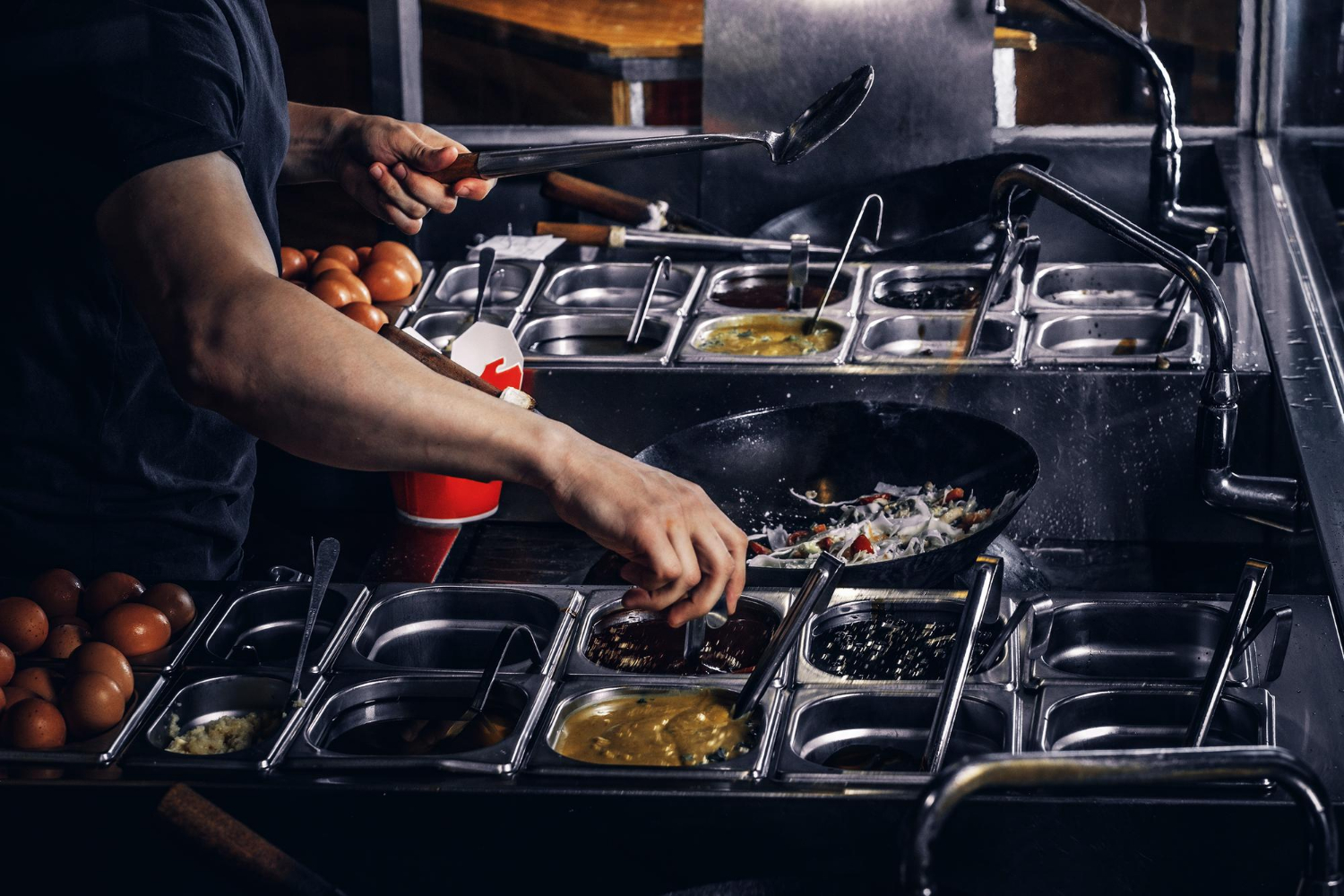
Railway catering runs on a clock that does not move. Hundreds, sometimes thousands, of meals have to be cooked, portioned, and loaded inside a fixed window, and every tray needs to taste and look like the one before it.
Choosing commercial kitchen equipment for railway catering is harder than it looks, because the right setup depends on your catering model, menu, peak output, space, workflow, and hygiene needs. This guide will help you shortlist equipment and capacity rather than simply hand you a product list.
What Makes Railway Catering Different From a Standard Commercial Kitchen?
A restaurant kitchen cooks to order through the day. A railway kitchen usually cooks in large batches against a departure time, then packs and labels food that will be eaten hours later, often far from the kitchen. That changes what you expect from every machine: output per batch, speed between batches, and how well food holds its temperature once cooked.
The catering model matters too. A base kitchen supplying several trains carries a different load from a pantry car or a station-side unit, and e-catering orders add smaller, scattered batches on top. Space is also tight, so an oversized machine that blocks movement can cost more time than it saves.
Essential Commercial Kitchen Equipment for Railway Catering
The railway kitchen equipment you need falls into four groups: preparation, cooking, cold storage, and holding and dispatch. Each group should be sized against the same peak output, since one undersized stage slows everything behind it.
Here is how each group works, starting with preparation.
Bulk Food Preparation Equipment
Prep is where time quietly disappears. Peeling, cutting, and kneading by hand is slow and uneven at high volume, and it holds up every station that follows. The aim of these machines is to keep the cooks supplied on schedule.
These are some of the options Alister includes for this stage:
- SS Potato Peeler 25 kg:
A stainless steel peeler that clears large batches of potatoes without hours of hand work.
- Indian Dough Kneader 40 kg:
Dough kneader for Indian breads so the bread section does not fall behind.
Bulk Cooking Equipment
Commercial cooking equipment decides how many meals leave the kitchen in an hour. Steam and combination cooking suit rice, vegetables and baked items, while kettles and ranges usually handle dals and gravies. Whatever you pick, compare its batch size with your peak window, not your daily average.
These are some of the options Alister includes for this stage:
- EKA Electric Combi Oven, 5 Trays:
This oven bakes, roasts, and steams in one unit, which helps when a menu needs more than one cooking method.
- Panasonic Steamer Rice Cooker 4.2L:
Our cooker cooks rice and keeps it warm afterwards, and it suits smaller rice batches or supporting stations.
Refrigeration and Cold-Chain Equipment
Cold storage protects food before cooking and after it. Raw ingredients, cooked items waiting to be packed, and chilled sides all need space that holds its temperature even when doors open constantly during a rush. Plan separate zones so raw and cooked food never share a shelf.
These are some of the options Alister includes:
- Celfrost Black Back Bar Refrigerator, 3 Doors:
A three-door chilled unit for keeping ingredients and prepared items close to the work area.
- Hoshizaki Undercounter Freezer, 4 ft:
This undercounter freezer keeps frozen items within reach at a prep station.
Food Holding, Staging and Dispatch Equipment
Between cooking and dispatch, food often sits for a while. Holding equipment keeps it hot until it is portioned and packed, which matters for both quality and food safety. It is also where a slow, crowded packing line shows up first.
These are some of the options Alister includes:
- Electric Bain Marie With Glass Top, 3 Pans:
The bain marie keeps cooked dishes warm in shared pans while they are portioned.
- Zedteck Table Top Food Warmer, Double Door:
A compact warmer for holding portioned or packed items until they are loaded for dispatch.
How to Calculate the Right Equipment Capacity for Railway Catering
Capacity is where many buying decisions go wrong, and it is easy to get right on paper before any money is spent.
Here is the order to work through the numbers.
-
Start With Daily Meal Volume
Add up the meals you must produce across trains, stations and e-catering orders in a day. Split them by meal type, since breakfast, lunch and dinner often use different equipment.
-
Calculate Peak-Hour or Peak-Window Demand
Find the window when most food has to be ready, such as the hours before a train departs. Size your equipment to that window, not to the daily total.
-
Factor in Batch Size and Cycle Time
Divide peak demand by what a machine produces per batch and by how many batches fit in the window. A machine that finishes a batch every 20 minutes manages three batches an hour at best, before loading and cleaning time.
-
Match Capacity to the Menu
A menu heavy on rice and gravies needs different capacity from one built around fried or baked items. List each dish, its cooking method, and its quantity before you choose machines.
What to Check in the Equipment Specification Before You Buy
Industrial kitchen equipment spec sheets can look complete and still leave out what matters on site. Use the checklist below when you compare quotes, and ask the supplier to confirm each point in writing.
| Check | What the buyer should confirm |
| Capacity | Batch capacity and realistic output |
| Cycle time | Production time between batches |
| Dimensions | Equipment + operating/maintenance clearance |
| Utilities | Power, phase, gas, water, drainage |
| Material | Appropriate food-contact construction |
| Cleaning | Access to removable/cleanable components |
| Safety | Relevant safety features and certifications |
| Installation | Site requirements and installation responsibility |
| Maintenance | Preventive maintenance needs |
| Spare parts | Availability and lead time |
| Warranty | What is actually covered |
| Service | Response and after-sales support |
| Scalability | Whether capacity can grow with demand |
Common Mistakes When Buying Railway Catering Equipment
Most problems with railway catering equipment trace back to a handful of buying decisions. They are easy to avoid once you know where to look.
Here are five worth checking against your own plan.
-
Choosing Equipment Based Only on Price
A low price can hide smaller capacity, slower cycles or weak service support. Compare cost per meal over the life of the equipment, not just the invoice.
-
Buying for Average Demand Instead of Peak Demand
A machine that copes on a normal day can fall behind inside the dispatch window. Plan for the busiest window and decide how surge days will be covered.
-
Choosing Equipment Before Finalising the Menu
Equipment bought before the menu is settled often ends up with the wrong tray size or cooking method. Lock the main dishes first, then match the machines to them.
-
Ignoring Utilities and Installation Requirements
A machine that needs three-phase power, gas, or a drain point is no use if the site lacks them. Confirm supply and installation space before you order.
-
Treating Each Machine as a Standalone Purchase
A fast oven is wasted if the chiller or packing line cannot keep up. Check that each stage can match the output of the stages around it.
Conclusion
Buying for a railway kitchen comes down to a few honest numbers: how many meals, in which window, from which menu. Once those are clear, the equipment list mostly writes itself. Treat the kitchen as one line, from peeling to dispatch. Check each machine’s capacity, utilities, cleaning access and service support before you commit, and you avoid most of the mistakes covered above.
If you are looking to buy railway catering equipment, Alister offers commercial kitchen equipment across preparation, cooking, refrigeration and holding. You can enquire with your menu and peak output to compare options for your kitchen.
FAQs
1. What equipment is needed for a railway catering kitchen?
A railway catering kitchen typically needs preparation machines, cooking equipment, refrigeration and freezing, and hot holding units for dispatch. Add the packing, washing, and utility support your catering model requires.
2. How do I choose commercial kitchen equipment for bulk railway catering?
Start with your menu, peak output and dispatch window, then match batch capacity and cycle time to them. Check space, utilities, cleaning access and service support before comparing prices.
3. What capacity should railway catering equipment have?
There is no single figure, because it depends on your meal volume and peak window. Divide peak demand by batch size and batches per hour to find a starting point.
4. Which equipment is essential for large-scale food production?
Cooking equipment such as combi ovens, steamers, and ranges, plus prep machines like peelers and kneaders, carries most of the load. Refrigeration and holding units keep that output safe until dispatch.
5. What should I check before buying railway catering equipment?
Confirm capacity, cycle time, dimensions, utilities, materials, cleaning access, safety features, installation, spares, warranty, service, and room to scale. The checklist above covers each point.