
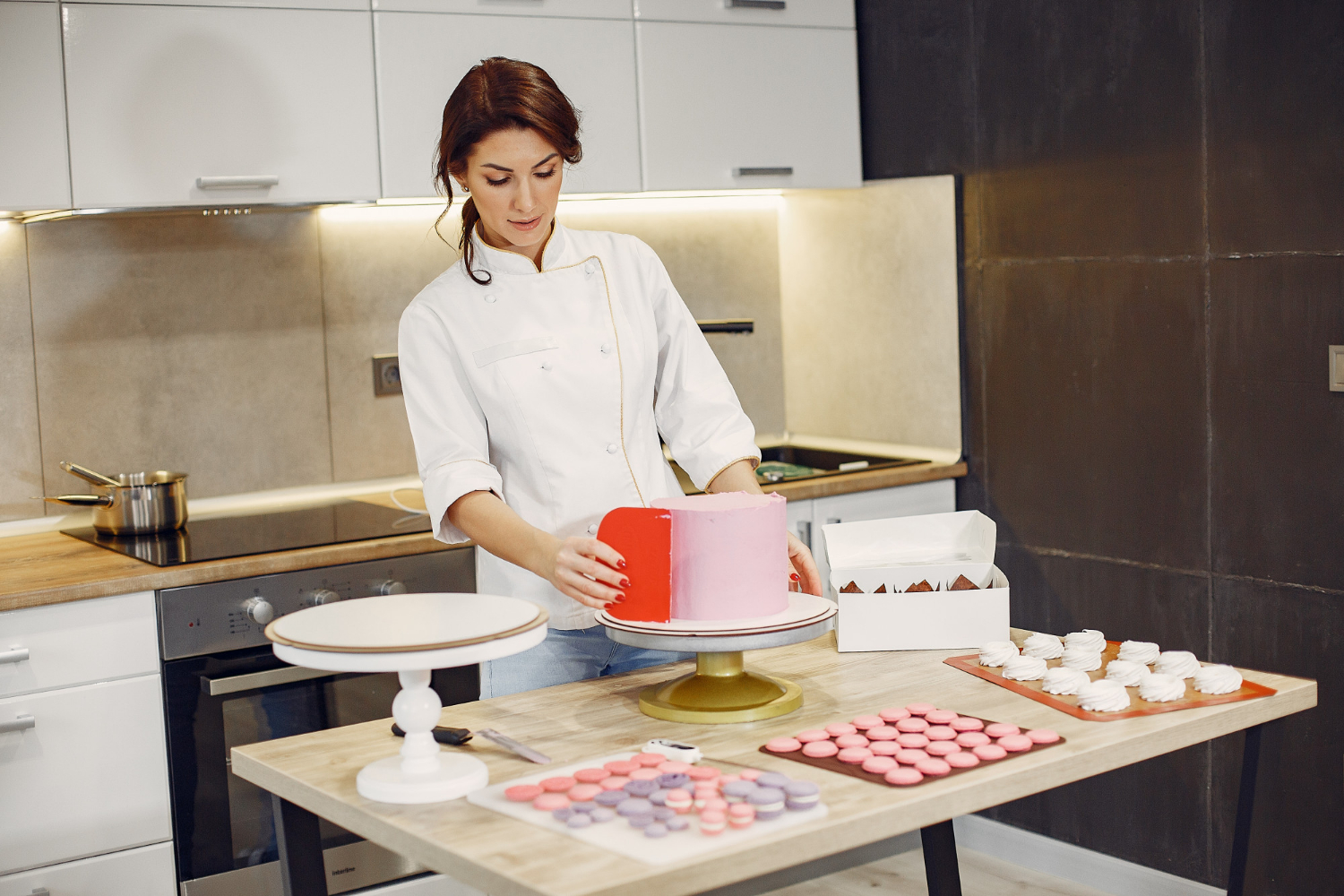
Starting a bakery business from home can begin with a small menu and a manageable number of orders, but even a small operation needs the right equipment to produce consistent results. As orders increase, relying entirely on basic household appliances can make production slower and harder to manage.
The challenge is knowing what to invest in first. A baker making cakes and cookies will have different requirements from someone producing bread, pastries or larger batches. The right home baking business equipment should therefore be selected around the products being made, expected order volumes, available kitchen space and plans for future growth.
This guide covers the essential baking equipment and supporting infrastructure that can help create a practical home bakery setup, from ovens and mixers to weighing, refrigeration and storage.
Understanding Your Home Baking Business Requirements
Before purchasing equipment, it helps to understand how the business will actually operate. The equipment required for a small baking business depends largely on the menu and production volume.
Start With Your Product Menu
The first step is to identify what you intend to sell. Cakes, cupcakes, cookies, brownies, breads, buns and pastries all have different preparation and baking requirements.
For example, a cake-focused business may place greater importance on a reliable oven, stand mixer and refrigeration, while a business producing bread may need a dough mixer and greater preparation space.
Starting with the menu helps prevent unnecessary purchases and ensures that your home bakery equipment supports the products you plan to sell.
Estimate Your Production Volume
The number of orders you expect to handle will influence equipment capacity.
A baker producing a few cakes each week may be comfortable with smaller equipment, while someone handling multiple orders every day will need greater mixing, baking, refrigeration and storage capacity.
It is worth considering both current requirements and realistic short-term growth when planning a baking business startup.
Consider Your Available Kitchen Space
Space is often one of the biggest limitations in a home bakery. Equipment should fit comfortably without making it difficult to move between preparation, baking, cooling and packing areas.
Before purchasing larger equipment, check its dimensions, electrical requirements, ventilation needs and access to the installation area. Good planning can make even a compact kitchen more efficient.
Essential Baking Equipment for a Home-Based Business
The oven and mixer are generally the core of a baking setup, but several other pieces of equipment help create a consistent production workflow.
1. Baking Equipment
The oven has a direct impact on the final product, making it one of the most important investments in a home bakery. Temperature stability, cooking capacity and the type of products being made should all be considered before choosing an oven.
- EKA Convection Oven Without Steam Manual Controls: A convection oven can be a practical choice for cakes, cookies, pastries and other products that require consistent dry heat. Its manual controls also give the baker direct control over temperature and the baking process.
- UNOX CHEFTOP XVC 105 EP 3 GN 1/1 Electric Combi Oven Power: A combi oven offers greater flexibility for a growing baking operation handling different products. Its larger capacity can be useful when production increases and several batches need to be managed more efficiently.
- Electric Deck Oven Classical 1 Deck: A deck oven can be considered for products such as breads and other baked goods that benefit from consistent heat. A single-deck configuration can provide additional baking capacity while remaining suitable for operations with limited space.
When you are selecting baking equipment for a home business, it is important to consider how many batches need to be produced during a typical working day rather than choosing an oven based purely on its maximum capacity.
2. Mixing and Preparation Equipment
Mixing affects both the consistency of the recipe and the time required to prepare each batch. The equipment needed will depend on whether the bakery focuses primarily on cakes and desserts or also produces heavier doughs.
- Reliance Weight Machine 30kg: Accurate weighing is essential when recipes need to be reproduced consistently. A 30 kg weighing machine can help measure ingredients and production quantities accurately as the number of orders increases.
- KitchenAid Tilt Head Stand Mixer 4.8 Ltr: A 4.8-litre stand mixer can be suitable for smaller-scale preparation of cake batters, creams, icings, cookies and similar products. It provides a dedicated mixing solution without requiring the baker to handle every preparation manually.
- Spiral Dough Mixer 08 Litre: A spiral dough mixer is particularly useful for businesses producing bread, buns and other yeast-based products. It is designed to handle dough preparation more efficiently than manual mixing, making it worth considering as bread production increases.
- Blender JTC TM 788: A commercial blender can assist with preparing fillings, fruit mixtures, sauces and other ingredients used in different bakery products. A dedicated blender can also make repetitive preparation tasks easier to manage as the menu expands.
3. Cooling and Storage
Baking does not end when a product comes out of the oven. Ingredients and finished preparations may require controlled storage, while products also need adequate space to cool before decorating or packing.
- Celfrost Single Solid Door Vertical Freezer 350 Ltr: A 350-litre vertical freezer provides dedicated space for frozen ingredients and products. Its vertical format can make efficient use of floor space, which is particularly useful when working within a compact home bakery.
- Celfrost Visi Bottle Cooler 300 Ltr: A glass-door cooler for storing and displaying chilled beverages and other temperature-sensitive items. The size can be customized based on available space and storage requirements.
- Coldwave Chest Freezer 100 Ltr: A compact chest freezer suitable for storing frozen ingredients and prepared products. It can also be customized in size to suit the available space and required storage capacity.
For a larger home bakery setup, refrigeration and freezing capacity should be planned according to the ingredients used, order volume and storage time. Butter, dairy products, frozen fruits and other temperature-sensitive ingredients need appropriate storage conditions.
Common Mistakes to Avoid When Buying Baking Equipment
- Buying Equipment Based Only on Price
The cheapest equipment may not always be the most practical choice for regular production. Consider capacity, construction, ease of use, maintenance and expected workload before making a purchase.
- Choosing Equipment That Is Too Small
Undersized equipment can become a bottleneck surprisingly quickly. If the business is already receiving regular orders, consider whether the selected oven, mixer or freezer can realistically handle the expected workload.
- Buying More Equipment Than You Need
The opposite problem is also common. Purchasing specialised equipment before there is enough demand can consume valuable kitchen space and capital.Start with the home baking essentials required for your menu and add equipment as production justifies it.
- Ignoring Power and Utility Requirements
Larger baking equipment can have different electrical and utility requirements from domestic appliances. These should be checked before purchase and installation.
- Overlooking Cleaning and Maintenance
Equipment used regularly needs to be easy to clean and maintain. Accessibility, removable components and service requirements should all be considered during selection.
- Not Planning for Future Production
A home bakery may start with a few orders and gradually develop into a much larger operation. Choosing equipment with realistic growth in mind can reduce the need for frequent replacements.
When Should a Home Baker Upgrade to Commercial Equipment?
The need to upgrade usually becomes apparent through day-to-day production rather than a specific order volume.
Consider moving towards commercial-grade equipment when:
- Baking several batches takes too long
- The existing oven cannot keep up with orders
- Mixer capacity is limiting production
- Ingredients require more refrigeration or freezer space
- Preparation and storage areas are becoming overcrowded
- Product consistency becomes difficult to maintain
- More time is being spent on manual preparation
- The business is regularly handling larger customer orders
At this stage, investing in professional home bakery equipment can help improve productivity and create a smoother transition towards a larger baking operation.
Conclusion
For a home baking business, equipment has to work around the products being made, the quantities required and the space available. A good setup therefore starts with getting the essentials right, from the oven and mixer to weighing, refrigeration and preparation equipment. Each piece should be selected based on how it will be used in the day to day baking process and how well it fits within the available workspace.
The aim is to have equipment that makes regular production easier without creating unnecessary costs or taking up space that the business does not yet need. At Alister, we help you choose the right equipment by understanding your production requirements, available space, workflow and the type of products you plan to make before recommending suitable options. This helps you put together a practical home bakery setup with equipment that matches your current needs and can support your production as requirements change.