
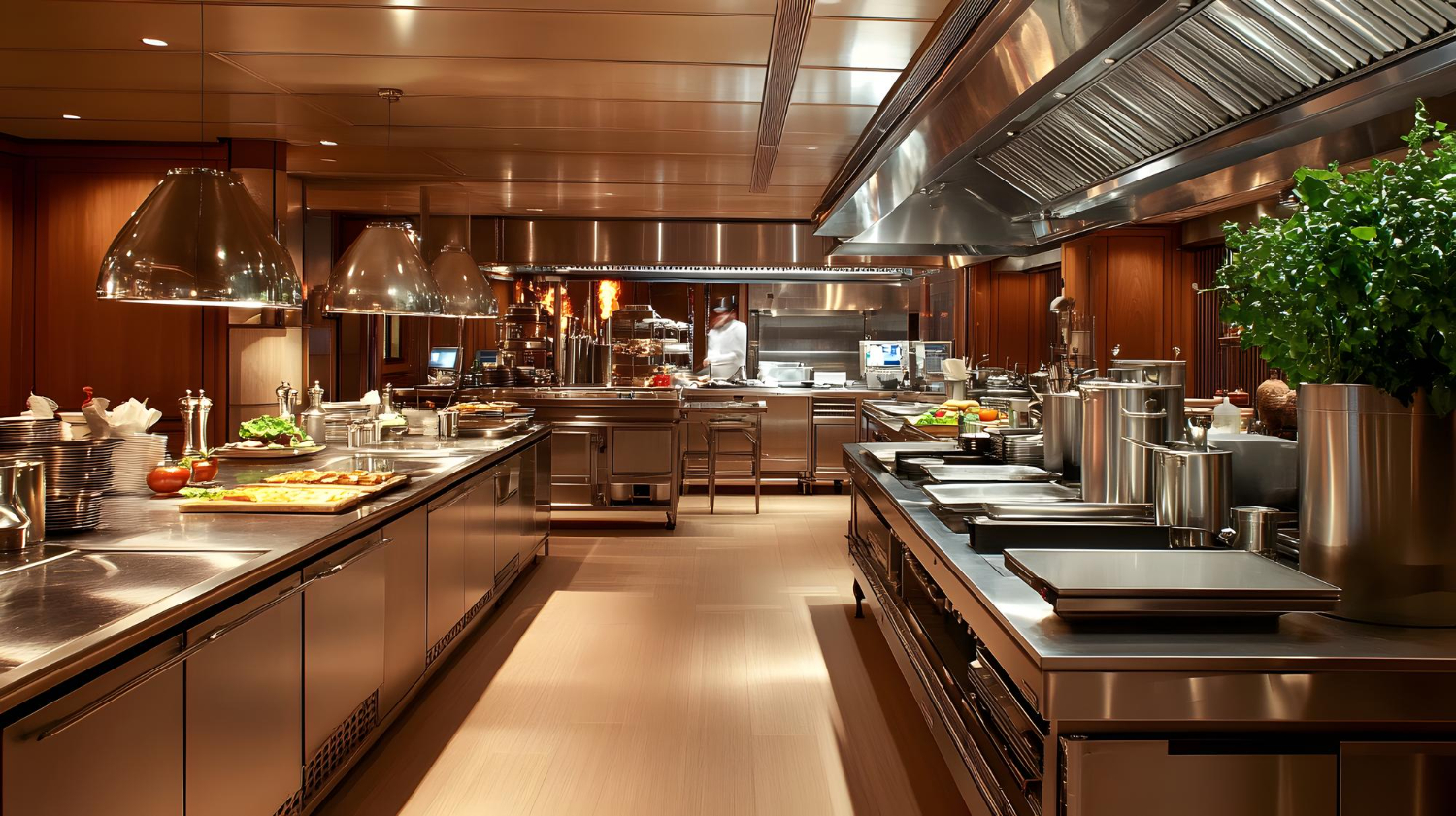
Wedding season is when a commercial kitchen gets tested harder than at any other time of year. A kitchen can go from a quiet week to several events in a single day.
Caterers feel the same squeeze, often while cooking at venues that are not their own. This guide looks at where wedding kitchens come under strain, how to scale production without chaos, and what to weigh when planning or upgrading a commercial kitchen for banquet halls.
Why Wedding Season Puts Extra Pressure on Commercial Kitchens
Wedding menus are large and varied. Starters, live counters, several main dishes, rice, breads, and desserts all have to be ready for hundreds of guests within a narrow service window. Unlike a restaurant, you cannot spread the orders across the evening.
The calendar adds to the load. Auspicious dates cluster, the season pauses again from mid-December to mid-January, and exact dates vary by region and community. During the busy weeks, kitchens often handle back-to-back or overlapping events with very little time to reset.
Common Commercial Kitchen Challenges During the Wedding Season
Wedding kitchens rarely struggle because of one big problem. It is usually several small pressures arriving at the same time. Here is where those pressures tend to show up:
-
Handling Large-Volume Food Preparation
Cooking for hundreds means vegetables, marinades, and gravies are prepared in quantities that an everyday kitchen is not set up for. Batch size matters, because a batch that is too large cooks unevenly and one that is too small multiplies the number of cycles. Working backwards from service time to set prep and production cycles keeps the team from falling behind.
-
Managing Multiple Dishes at the Same Time
A wedding menu asks for tandoor items, fried starters, gravies, rice, and breads, often all at once. When two dishes need the same fryer or the same burner, one of them waits. Mapping each dish to a piece of equipment ahead of time shows these conflicts before the event day.
-
Maintaining Consistent Cooking Quality
Taste drifts when several cooks work from memory. Written recipes, fixed temperatures, and standard batch sizes help the dal at the second event taste like the one at the first. Standardising the process matters more than depending on any one cook.
-
Managing Refrigeration and Cold Storage
Raw ingredients, prepped items and cooked food all need cold space, and they should not share it carelessly. Staging prepared items ahead of service takes room that a regular kitchen rarely has spare. Keeping raw and cooked food apart and labelling each shelf cuts down on mix-ups and food safety risk.
-
Coordinating Preparation, Cooking and Service
Everything moves in a chain: ingredients are received and prepped, cooked in the right order, held at serving temperature and sent out to the service area. A delay at any link, such as late prep or cooked food waiting for the service team, pushes back the next one. Clear timings between the kitchen and service staff keep the whole chain moving.
-
Managing Simultaneous Events and Shared Equipment
When two or more events run from the same kitchen, the equipment, cold storage and staff are shared. Without a schedule, one event’s cooking can block another’s, and dishes that appear on both menus can get mixed up. Assigning time slots, stations, and labelled storage to each event stops them from getting in each other’s way.
How Banquet Halls and Caterers Can Scale Kitchen Production
Scaling starts with the plan. Confirm event dates and guest counts early, break each menu into prep and cooking tasks, and set production timelines backwards from service time. Cooking in controlled batches and staging prepared items ahead takes pressure off the final hours.
After that, look at the commercial kitchen setup itself. Separate stations for prep, cooking, holding, and washing reduce crossing paths, and shared equipment needs a booking schedule. If one stage keeps running late even with good planning, that is usually the place to add capacity.
Essential Commercial Kitchen Equipment for Large Wedding Events
Equipment cannot replace planning, but the right machines remove the stages where work gets stuck. Here is how each group supports a wedding kitchen.
Commercial Cooking Equipment
Wedding catering equipment starts with the cooking line, where rice, fried items, and tandoor dishes all compete for time. Matching each type of equipment to a menu group helps avoid queues at the stove. It also helps to know which dishes carry the menu and cannot wait.
These are the options Alister includes:
- Panasonic Steamer Rice Cooker 7.2L:
A steamer rice cooker that cooks rice automatically and keeps it warm afterwards.
- Aceplus Standing Electric Deep Fryer 28 Ltrs:
A floor-standing electric fryer with two baskets for starters and snacks.
- Hotline Electric Tandoor HPET-4600:
A compact electric tandoor with a timer and a see-through window for keeping an eye on what is cooking.
- Rational iCombi Pro 10 GN 1/1 Combi Oven:
A versatilecommercial combi oven that combines steam and convection cooking for consistent results across a range of dishes.
Commercial Food Preparation Equipment
Prep decides how smoothly the rest of the day goes. Cutting vegetables or mincing meat by hand for hundreds of guests takes hours, and kitchen equipment that handles these jobs frees skilled cooks to stay on the stove. Even cuts also help dishes cook evenly.
Alister’s range also covers these prep machines:
- Indian Vegetable Cutting Machine Deluxe:
A vegetable cutter with six different blades for cutting large quantities in different styles.
- Sirman Meat Mincer TC-8 Vegas:
A compact meat mincer for preparing mince for dishes like kebabs and keema.
Refrigeration and Cold Storage Equipment
Wedding kitchens need cold space at several points: raw ingredients, prepped items, and finished cold dishes. Keeping them in separate units makes segregation easier, and extra capacity gives you room to stage food before the event. Frozen stock needs its own space too.
From Alister’s refrigeration and freezer categories, you can look at:
- Undercounter Refrigerator STF 3100 TN:
A three-door undercounter refrigerator that keeps prepared ingredients cool right at the prep station.
- Western Chest Freezer 536 Liters F550-GT25:
A large glass-top chest freezer for storing frozen ingredients and prepared items in bulk.
Hot Holding and Serving Equipment
Food often has to wait before it is served. Hot holding keeps cooked dishes at serving temperature while the rest of the menu catches up, and serving equipment presents the food neatly at the counter. Both reduce the pressure to rush dishes out the moment they are cooked.
Alister also lists these holding and serving options:
- SS Service Bain Marie with Sneeze Guard for 4 GN Pans 1/1:
A stainless steel service bain marie with a glass sneeze guard, made to hold four pans of food for serving.
- Hotline Food Warmer Vault 50L:
A compact two-shelf food warmer with toughened glass for keeping smaller portions of food warm.
Storage, Racks and Transport Equipment
Dry ingredients, utensils and packaging all need organised space, and a wedding day involves a lot of moving between stations. Racks keep items off the floor and easy to find. Transport carts and trolleys are worth planning for in the layout too, especially when food travels between the kitchen and the service area.
This is the storage option Alister includes:
- SS Storage Rack 48 Inch:
A five-shelf stainless steel storage rack for keeping ingredients, utensils and supplies organised.
Dishwashing and Cleaning Equipment
A wedding produces a large number of plates, glasses and cooking vessels in a short time. The wash area is easy to overlook, yet a slow one can leave you short of clean items in the middle of an event. Pre-rinsing before machine washing keeps things moving.
These are the options Alister includes for washing:
- Winterhalter Under Counter Dishwasher U-50:
An undercounter dishwasher from Winterhalter that fits beneath a counter and takes over part of the washing work.
- T&S Pre-Rinse Unit with Add-on Faucet Wall Mounted:
A wall-mounted pre-rinse unit with a spray valve and an add-on faucet for rinsing food off dishes before washing.
How to Plan a Commercial Kitchen for Multiple Wedding Events
Planning for several events works best when you start from the guests and work down to the equipment. Each step below builds on the one before it. Here is the sequence.
-
Assess Expected Guest Capacity
Start with the number of guests per event and how many events could overlap. Use confirmed bookings first, then leave a sensible margin for late additions.
-
Calculate Daily and Event-Wise Production Requirements
Convert guest counts and menus into quantities of each dish, then into batches. Do this event by event and for the whole day, so you can see where the peaks fall.
-
Identify Kitchen Bottlenecks
Find the stage that is always behind, whether it is cutting, frying, cold storage or washing. That stage sets the pace for everything after it.
-
Match Equipment Capacity to Production Volume
Compare what each piece of equipment can handle with the volume you actually need at peak. Add or replace equipment only where the numbers show a gap.
-
Plan Storage and Refrigeration Capacity
Work out how much cold, frozen, and dry storage you need at the busiest point, including staging space. Plan separate areas for raw and cooked food from the start.
How Technology and Equipment Can Improve Kitchen Efficiency
Technology in a wedding kitchen does not have to be complicated. Timers, automatic cooking functions, digital temperature controls, and simple production sheets take some guesswork out of busy days. The right commercial kitchen equipment also makes results easier to repeat from one event to the next, which is hard to manage when everything depends on individual judgement.
What to Consider When Upgrading a Commercial Kitchen for Wedding Catering
Upgrades go better when they start from your own numbers instead of a product list. Look at how your commercial kitchen for banquet halls or catering operation actually runs on its busiest days, then check each option against that picture. Here is a checklist to work through.
- Expected guest capacity: the number of guests you serve at one event.
- Peak simultaneous events: how many events may share the kitchen on the same day.
- Menu requirements: the dishes, cooking methods, and equipment types your menus call for.
- Batch size: whether the equipment suits the quantities you cook at a time.
- Production hours: how long the kitchen runs on an event day.
- Kitchen space: the room available for equipment and for people to move.
- Equipment footprint: the floor and counter area each unit takes up.
- Utilities: the power, gas, and water supply each unit needs.
- Refrigeration and storage: cold, frozen, and dry storage for peak days.
- Energy consumption: running costs over a full season.
- Cleaning requirements: how easy each unit is to clean between events.
- Durability: whether the build can handle heavy, repeated use.
- Ease of operation: how quickly new or temporary staff can learn it.
How a Well-Planned Commercial Kitchen Helps Handle Wedding Season Demand
A well-planned kitchen takes the guesswork out of busy weeks. When stations, schedules, and storage are set up in advance, cooks spend less time waiting for equipment or searching for ingredients. Decisions get made before the event, not in the middle of service.
It also makes overlapping events easier to manage. Clear time slots, labelled storage and matched equipment capacity help each event run on its own track. The pressure of wedding season does not go away, but it becomes far easier to handle.
Conclusion
Wedding season asks a lot of a kitchen. Menus are large, service windows are tight, and events often overlap.
Most of the answer lies in planning: knowing your guest numbers, setting batch sizes, separating stations, and keeping a schedule for shared equipment. Equipment helps most when it is chosen to fix a stage that is genuinely slowing the kitchen down.
For banquet halls and caterers looking at upgrades, Alister’s range covers cooking, preparation, refrigeration, holding, storage, and dishwashing, so you can review the kitchen stage by stage before deciding what to add.
FAQs
1. How can banquet halls increase kitchen capacity during wedding season?
Plan production around confirmed events, cook in set batches, and give each station a clear role. Add equipment only at the stage that keeps running behind.
2. What commercial kitchen equipment is needed for wedding catering?
Most kitchens need cooking equipment, prep machines, cold and frozen storage, hot holding, racks, and a dishwashing setup. The exact mix depends on your menu and guest numbers.
3. How should a banquet kitchen be planned for large guest counts?
Start from guest numbers and menus, convert them into quantities and batches, then check that equipment and storage can handle the peak. Separate stations for prep, cooking, holding, and washing.
4. How can caterers manage bulk food preparation efficiently?
Prepare ingredients ahead in planned batches and use machines for repetitive tasks like cutting. Write down recipes and timings so every event runs the same way.
5. What should caterers consider when upgrading commercial kitchen equipment?
Look at capacity, batch size, kitchen space, utilities, and storage against your busiest days. Check cleaning needs, durability, ease of use, and service support too.