
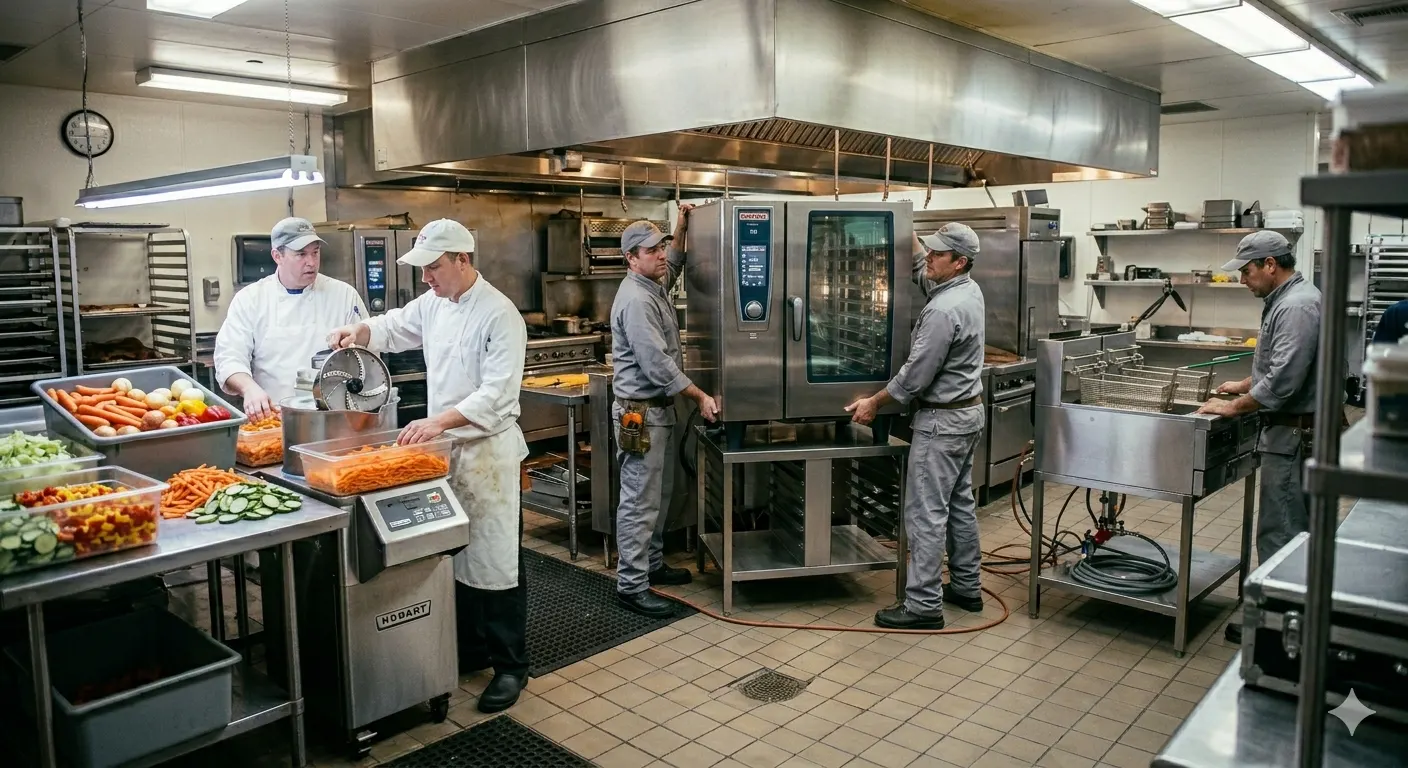
Speed is Built into the Kitchen, Not Just the team.
In a high-pressure service environment, speed is often mistaken for a function of staff efficiency. But in reality, even the most skilled teams can only move as fast as the systems around them allow.
Delays don’t usually come from a lack of effort – they come from limitations in equipment, workflow, and kitchen design. A slow oven cycle, a congested cooking range, or even a delay in dishwashing can ripple across the entire service experience.
This is where modern restaurants are shifting their focus. Instead of pushing teams to work faster, they are investing in commercial kitchen upgrades for faster service that remove friction from operations. With the right infrastructure and modern restaurant kitchen equipment in place, speed becomes a natural outcome – not a constant struggle.
Where Most Restaurants Lose Time (And Don’t Realize It)
Service delays are rarely caused by one major issue. They build up through smaller inefficiencies across different stages of the kitchen:
- Cooking delays due to single-function or slow-response equipment
- Manual prep time that eats into peak-hour readiness
- Last-mile delays between cooking and serving
- Cleaning bottlenecks that slow down table turnover
What makes these issues challenging is that they often go unnoticed until service pressure peaks. By then, the kitchen is already reacting instead of operating efficiently.
The solution isn’t to speed up people – it’s to upgrade the system they work within.
High-Impact Equipment Upgrades That Actually Improve Service Speed
The difference between a fast kitchen and a struggling one often comes down to the right upgrades. These systems are designed to improve output, reduce wait times, and support high-pressure service environments.
Multi-Function Cooking Systems
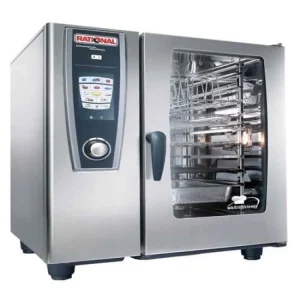
The shift from conventional cooking to integrated systems has redefined kitchen efficiency. Today, speed comes from the ability to execute multiple techniques within a single, streamlined setup. This is where advanced systems like the RATIONAL COMBI OVEN SCC – 61E make a measurable difference.
In traditional kitchens, separate equipment is often used for baking, steaming, and roasting – slowing down workflows and increasing coordination effort. A combi oven eliminates this fragmentation by integrating steam, convection, and programmable cooking modes into a single unit, allowing chefs to manage varied cooking requirements more efficiently while maintaining consistency across every batch.
The result is not just faster cooking but a more controlled and predictable output, even during peak hours. Kitchens move from managing multiple appliances to relying on a single intelligent system, reducing both time and operational complexity.
High-Output Frying Systems
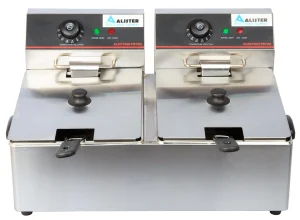
Fried items are often among the most ordered dishes and also the most prone to delays when demand spikes. The Electric Deep Fryer Double 8+8 Litre addresses this by enabling parallel cooking through dual tanks.
In many setups, single-tank fryers create unavoidable bottlenecks, where each batch must finish before the next begins. By introducing dual tanks, kitchens can handle orders more efficiently, supporting commercial kitchen equipment for fast service, especially in quick-service and high-turnover environments.
In addition to improving speed, electric frying systems reduce reliance on traditional gas setups, offering more controlled energy usage and a cleaner, more efficient cooking environment. More importantly, they ensure that speed doesn’t come at the cost of quality – each batch is cooked under consistent conditions, regardless of volume.
Holding & Service Flow Systems
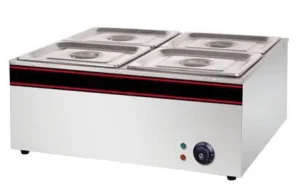
Speed doesn’t end at cooking. In many kitchens, delays occur in the final stage – between preparation and service. The Electric Bain Marie Table Top 4 Pans plays a critical role here by maintaining food at optimal serving temperatures without overcooking.
Without dedicated holding systems, kitchens often rely on reheating dishes on demand, which slows down service and disrupts flow. By keeping food ready for plating, this system eliminates last-minute delays and supports a smoother service rhythm.
During peak hours, this shift allows teams to move from reactive serving to a more controlled, ready-to-serve approach – reducing pressure while improving speed.
Prep Automation Systems
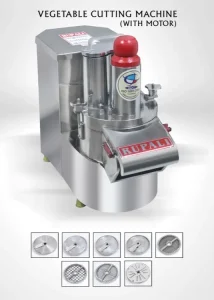
Preparation is one of the most time-consuming and labour-intensive stages in any kitchen. The Indian Vegetable Cutting Machine addresses this by automating bulk vegetable processing with speed and consistency.
Manual prep not only consumes time but also creates variability and dependency on skilled labour. By introducing automation, kitchens can complete large volumes of prep work quickly, with uniform results across every batch.
This ensures that the kitchen is fully prepared before peak hours begin, allowing service to run without interruptions caused by ongoing prep work.
High-Capacity Cooking Ranges
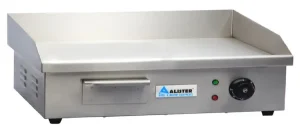
One of the biggest limitations in traditional kitchens is sequential cooking – waiting for one dish to finish before starting another. The Electric Griddle Plate (Big) changes this dynamic by enabling multiple cooking processes to run simultaneously while operating on an electric system instead of traditional gas setups.
Instead of working in a linear flow, where each dish depends on the previous one, kitchens can operate in parallel – handling multiple components at the same time. This reduces congestion, improves coordination, and allows the kitchen to manage higher order volumes without slowing down.
The result is a more flexible and responsive cooking environment, especially during high-demand service periods.
Fast Turnaround Cleaning Systems
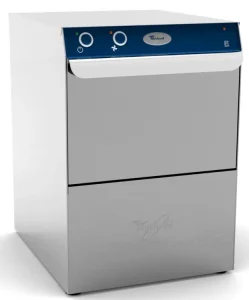
Cleaning is often treated as a background task, but in reality, it plays a direct role in service speed. The Undercounter Dishwasher by Whirlpool ensures that utensils, plates, and glassware are cleaned and ready for reuse within minutes.
In kitchens that rely on manual or slower cleaning methods, operations can quickly stall due to a lack of available equipment. By introducing a fast, automated system, this limitation is removed, allowing service to continue without interruption.
This not only improves efficiency but also supports better hygiene standards while enabling faster table turnover.
Built for Performance, Backed by Alister
In a busy kitchen, you don’t have time to adjust your workflow around your equipment – it has to work for you from the start. That’s why having the right range of options matters.
With Alister, you’re not restricted to a one-size-fits-all setup. You can choose from equipment across trusted brands, with multiple variations that suit different kitchen sizes, menus, and service volumes. And when standard options don’t quite fit, customizable solutions help bridge that gap – so everything works the way your kitchen actually runs.
Choosing the Right Upgrades for Your Restaurant
Not every kitchen requires the same upgrades. The right investment depends on factors such as:
- Menu complexity and cooking techniques
- Daily order volume and peak-hour demand
- Available kitchen space and layout
- Existing operational bottlenecks
This is where a strategic approach becomes essential. Instead of upgrading randomly, restaurants need to identify where time is being lost and address those specific gaps.
With its range of commercial kitchen solutions, Alister supports restaurants in making these decisions with clarity, ensuring that every upgrade contributes directly to performance.
The Business Impact of Faster Service
Improving service speed is not just an operational goal – it directly influences overall business performance:
- Higher table turnover:
Faster preparation and service allow tables to be cleared and reassigned more quickly, especially during peak hours. This helps restaurants serve more customers within the same timeframe, increasing revenue without needing additional space. - Improved customer satisfaction and retention:
Shorter wait times create a smoother dining experience. When service feels efficient and predictable, customers are more likely to return and leave positive reviews, which directly impacts long-term growth. - Reduced dependency on manual labour:
With the right equipment in place, kitchens can maintain consistent output without relying heavily on additional staff. This helps manage labour costs while also reducing pressure on teams during busy service periods. - Better consistency in food and service:
Efficient systems ensure that dishes are prepared with uniform quality and timing, regardless of order volume. This consistency strengthens the overall brand experience and builds customer trust. - Stronger operational efficiency:
When every stage – from prep to cleaning – runs smoothly, kitchens face fewer disruptions. This leads to better coordination, fewer errors, and a more controlled service environment. - Sustainable business growth:
In a competitive market, the ability to deliver fast and consistent service becomes a key differentiator. Restaurants that optimize speed are better positioned to scale operations and maintain profitability over time.
Alister Powering Kitchens That Can’t Slow Down
Restaurants today are no longer just investing in equipment – they’re investing in how their kitchens perform under real service conditions. The focus has shifted from simply having the right tools to building systems that can handle pressure, maintain consistency, and support speed without disruption.
This is where Alister stands out. Instead of offering generic solutions, Alister brings together equipment that is designed to work reliably in demanding kitchen environments. From cooking and prep to cleaning, every category is built around improving workflow efficiency and reducing operational friction.
What makes the difference is the approach. Alister understands that no two kitchens operate the same way. By offering multiple equipment variations along with customizable options, restaurants can create setups that align with their specific needs, whether it’s space constraints, menu complexity, or service volume.
The result is a kitchen that feels more structured, more predictable, and easier to manage during peak hours.
Conclusion
Every kitchen reaches a point where working faster isn’t the answer anymore. The real change comes from improving how the kitchen functions as a whole.
When the right equipment is in place, the difference is immediate but also long-term. Teams spend less time adjusting and more time executing. Service becomes more predictable, and the overall pace of the kitchen feels more controlled, even during busy hours.
This is the kind of practical shift that Alister supports, helping kitchens move towards setups that are not only faster but also easier to manage and more reliable in everyday operations.