
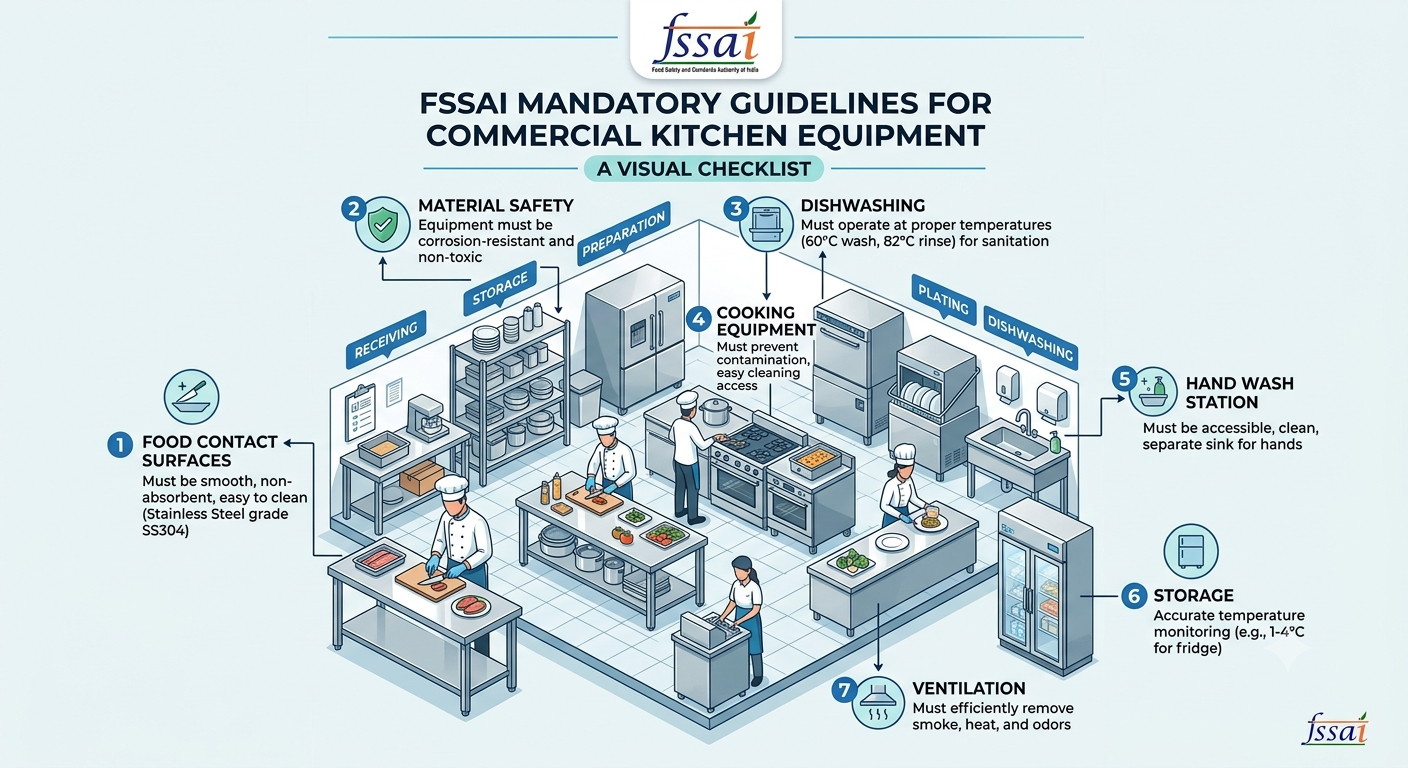
In any food business, maintaining hygiene starts long before the first meal is served. It begins with the kitchen itself. From food preparation and cooking to storage and cleaning, every piece of equipment plays a critical role in preventing contamination and ensuring safe food handling. That’s why following FSSAI guidelines for commercial kitchen equipment is essential for every commercial kitchen.
Whether you run a restaurant, hotel, cloud kitchen, bakery, cafeteria, or catering unit, using the right equipment is just as important as following proper food handling practices. Compliant equipment not only helps meet FSSAI kitchen requirements but also improves operational efficiency, simplifies maintenance, and builds customer confidence.
In this guide, we’ll explore the key equipment standards, common compliance mistakes, and practical steps to create a commercial kitchen that is safe, efficient, and fully aligned with FSSAI food safety standards.
Understanding FSSAI Requirements for Commercial Kitchens
The Food Safety and Standards Authority of India (FSSAI) establishes regulations that help food businesses maintain consistent hygiene, sanitation, and food safety practices. While these regulations cover every stage of food handling, commercial kitchen equipment is one of the most important aspects of compliance.
Every surface, appliance, and workstation used in food preparation should be designed to minimize contamination risks and support hygienic operations. Equipment that is difficult to clean, made from unsuitable materials, or poorly maintained can compromise food safety and increase the likelihood of regulatory violations.
Who Needs to Follow These Guidelines?
The FSSAI guidelines for commercial kitchen equipment apply to every licensed food business, regardless of its size or service model. These include:
- Restaurants and quick-service restaurants (QSRs)
- Hotels and resorts
- Cloud kitchens and delivery-only brands
- Cafés and bakeries
- Corporate cafeterias
- Catering companies
- Institutional and hospital kitchens
- Food courts and central production kitchens
Whether you’re setting up a new kitchen or upgrading an existing one, incorporating commercial kitchen compliance into your planning process helps create a safer and more efficient workspace from day one.
Why FSSAI Compliance Matters
For many businesses, compliance is seen as a legal obligation. In reality, it is a foundation for operational excellence. Meeting FSSAI food safety standards helps protect customers, improve day-to-day operations, and strengthen your business in the long run.
Protects Food Safety
Food passes through multiple stages before it reaches the customer: preparation, cooking, storage, and serving. At every stage, equipment plays an important role in preventing contamination. Using food-grade materials, maintaining proper temperatures, and following hygienic cleaning practices significantly reduce food safety risks.
By following FSSAI kitchen requirements, businesses can create a controlled environment where food is handled safely and consistently.
Builds Customer Confidence
Today’s customers are more conscious than ever about hygiene and food safety. Whether dining in or ordering online, they expect food to be prepared in clean and well-maintained kitchens.
Businesses that invest in hygienic equipment and maintain high cleanliness standards demonstrate professionalism and reliability. This not only builds trust but also encourages repeat business and positive customer reviews.
Prevents Legal and Financial Risks
Failure to comply with FSSAI regulations can lead to inspection failures, penalties, temporary closures, or damage to your brand’s reputation. Even minor equipment-related issues, such as rusted preparation tables or malfunctioning refrigeration systems, can result in compliance concerns.
Taking a proactive approach to commercial kitchen compliance helps businesses avoid costly disruptions while ensuring they meet regulatory expectations.
Improves Operational Efficiency
A compliant kitchen is also an efficient kitchen. Equipment that is designed for easy cleaning, proper workflow, and long-term durability reduces downtime, improves staff productivity, and simplifies maintenance.
For example, strategically placed preparation counters, properly designed washing stations, and reliable refrigeration systems enable staff to work more efficiently while maintaining hygiene standards.
Strengthens Business Reputation
Food safety is no longer just a compliance requirement. It is a competitive advantage. Restaurants, hotels, cafés, and cloud kitchens that consistently maintain high hygiene standards are more likely to earn customer loyalty and establish a strong reputation in an increasingly competitive market.
Compliance reflects a business’s commitment to quality, making it an important factor in long-term growth and success.
Essential FSSAI Guidelines for Commercial Kitchen Equipment
Meeting FSSAI guidelines for commercial kitchen equipment starts with selecting equipment that is safe, durable, and designed for hygienic food preparation. Every piece of equipment should support efficient operations while reducing the risk of contamination.
Food-Grade Materials
One of the fundamental food safety equipment requirements is the use of food-grade materials for all equipment that comes into contact with food.
Stainless steel is widely recommended because it offers several advantages:
- It is non-toxic and non-reactive.
- It resists corrosion and rust.
- It does not absorb moisture, odors, or food particles.
- It is durable enough for continuous commercial use.
- It is easy to clean and sanitize.
Using materials that deteriorate over time or react with food can compromise hygiene and increase contamination risks. Investing in food-grade equipment ensures long-term compliance and reliability.
Equipment Designed for Hygiene
The design of commercial kitchen equipment directly impacts how easily it can be cleaned and maintained. Equipment with rough finishes, sharp corners, or inaccessible areas can trap grease, food residue, and bacteria, making effective cleaning difficult.
To support commercial kitchen hygiene standards, equipment should feature:
- Smooth, seamless surfaces
- Rounded edges where possible
- Easily removable components for cleaning
- Minimal joints and crevices
- Accessible cleaning points
Choosing equipment with hygienic design features helps reduce cleaning time while maintaining a safer kitchen environment.
Temperature Control Requirements
Temperature control is one of the most critical aspects of food safety. Improper storage temperatures can encourage bacterial growth and compromise food quality.
Commercial kitchens should ensure that refrigeration and cold storage equipment includes:
- Accurate temperature controls
- Continuous temperature monitoring
- Proper insulation
- Adequate air circulation
- Clearly designated storage areas for raw and cooked foods
Regular temperature checks and calibration of refrigeration units help businesses remain compliant with FSSAI kitchen requirements while reducing food wastage.
Cleaning and Preventive Maintenance
Even the highest-quality equipment requires regular maintenance to remain safe and efficient. Preventive maintenance reduces equipment failures, extends operational life, and ensures consistent hygiene standards.
An effective maintenance programme should include:
- Daily cleaning schedules
- Routine equipment inspections
- Preventive servicing
- Immediate repairs for damaged components
- Documentation of maintenance activities
Maintaining detailed cleaning and service records also makes it easier to demonstrate commercial kitchen compliance during inspections.
Equipment Placement and Pest Prevention
The positioning of equipment plays a significant role in maintaining hygiene. Poorly placed equipment can make cleaning difficult, create hidden spaces where pests can thrive, and interrupt efficient workflows.
When planning a commercial kitchen, businesses should ensure:
- Adequate spacing between equipment for cleaning access
- Proper drainage around sinks and washing stations
- Storage racks positioned away from damp areas
- Waste disposal systems located away from food preparation zones
- Clear pathways for staff movement
Thoughtful equipment placement not only supports food safety but also improves workflow and overall kitchen efficiency.
FSSAI Guidelines for Different Equipment Categories
Every section of a commercial kitchen serves a unique purpose, and the equipment used in each area must meet specific hygiene and operational standards. Selecting equipment that complies with commercial kitchen equipment standards not only supports food safety but also improves efficiency and simplifies maintenance.
Food Preparation Equipment
Food preparation is one of the most critical stages where contamination can occur. Since ingredients are handled directly, preparation equipment should be designed to maintain hygiene and prevent cross-contamination.
Common food preparation equipment includes:
- Stainless steel work tables
- Preparation counters
- Vegetable washing sinks
- Cutting and chopping stations
To meet FSSAI food safety standards, these workstations should be made from food-grade materials with smooth, non-porous surfaces that are easy to clean and sanitize. Separate preparation areas for raw and ready-to-eat foods should also be considered to minimize contamination risks.
Regular cleaning after every food preparation cycle and routine inspection of work surfaces help maintain a hygienic environment.
Cooking Equipment
Cooking equipment is exposed to high temperatures, grease, and continuous use, making routine cleaning and maintenance essential for both food safety and operational efficiency.
This category includes:
- Gas ranges
- Ovens
- Deep fryers
- Steamers
- Grills
- Tilting pans
To comply with FSSAI regulations for restaurants, cooking equipment should be cleaned frequently to prevent grease accumulation, carbon deposits, and food residue. Exhaust hoods and ventilation systems should also be inspected and serviced regularly to ensure proper airflow and reduce fire hazards.
Maintaining cooking equipment not only supports compliance but also improves energy efficiency and extends equipment lifespan.
Refrigeration and Cold Storage Equipment
Proper cold storage is essential for preserving food quality and preventing bacterial growth. Refrigeration equipment should maintain consistent temperatures while allowing for organised storage of different food categories.
Key equipment includes:
- Reach-in refrigerators
- Walk-in cold rooms
- Freezers
- Blast chillers
- Display chillers
Best practices include:
- Monitoring and recording temperatures regularly
- Separating raw meat, seafood, dairy, and cooked food
- Avoiding overcrowding to allow proper air circulation
- Cleaning refrigeration units on a scheduled basis
- Checking door seals and temperature sensors periodically
Reliable refrigeration systems play a major role in meeting food safety equipment requirements and reducing food spoilage.
Storage Equipment
Safe storage practices are equally important in maintaining food quality and preventing contamination. Storage equipment should keep ingredients organized, protected, and easily accessible.
Common storage equipment includes:
- Stainless steel shelving
- Dry storage racks
- Ingredient bins
- Mobile storage units
Storage systems should:
- Keep food items off the floor
- Protect ingredients from moisture and pests
- Allow easy stock rotation using the FIFO (First In, First Out) method
- Clearly separate food items from cleaning chemicals and non-food materials
An organized storage area improves inventory management while supporting commercial kitchen hygiene standards.
Dishwashing and Cleaning Equipment
Cleaning equipment is the backbone of kitchen hygiene. Without proper washing and sanitising systems, even the best food preparation practices can be compromised.
Commercial kitchens should include:
- Three-compartment sinks
- Commercial dishwashers
- Handwashing stations
- Sanitising sinks
- Drying racks
To comply with FSSAI kitchen requirements, cleaning stations should follow a structured process of washing, rinsing, sanitising, and air drying. Staff should also use food-safe cleaning chemicals and maintain separate cleaning tools for different kitchen zones to avoid cross-contamination.
Common Compliance Mistakes That Can Lead to FSSAI Violations
Even well-equipped kitchens can fall short of compliance if proper maintenance and operational practices are ignored. Identifying common mistakes early helps businesses avoid costly penalties and maintain consistent food safety standards.
-
Using Non-Food-Grade Equipment
Using equipment made from materials that corrode, chip, or react with food can lead to contamination. Food-contact surfaces should always be constructed from approved food-grade materials such as stainless steel.
-
Neglecting Preventive Maintenance
Ignoring routine servicing often results in equipment failures, temperature inconsistencies, and hygiene issues. A preventive maintenance schedule helps identify problems before they disrupt operations.
-
Poor Refrigeration Monitoring
Many kitchens rely solely on refrigeration systems without regularly checking temperatures. Without proper monitoring, food may be stored outside safe temperature ranges, increasing the risk of spoilage and bacterial growth.
-
Improper Equipment Placement
Placing equipment too close together makes cleaning difficult and creates hidden areas where grease, dirt, and pests can accumulate. Proper spacing improves accessibility and supports better hygiene.
-
Inadequate Cleaning Documentation
Cleaning procedures should be documented and followed consistently. Missing cleaning records or maintenance logs can create challenges during inspections and make it difficult to demonstrate compliance.
-
Continuing to Use Damaged Equipment
Cracked worktops, rusted shelving, broken handles, and damaged seals should never be overlooked. Worn or damaged equipment can harbour bacteria and compromise food safety.
How to Build an FSSAI-Compliant Commercial Kitchen
Achieving commercial kitchen compliance begins with thoughtful planning rather than simply purchasing quality equipment. Every design decision should contribute to a safer, more efficient working environment.
-
Start with Smart Kitchen Layout Planning
A well-designed kitchen separates preparation, cooking, storage, washing, and waste disposal areas to minimize cross-contamination and improve workflow. Clear zoning also helps staff move efficiently during busy service hours.
-
Choose the Right Commercial Equipment
Select equipment that is durable, food-grade, and suitable for your menu and production capacity. Investing in high-quality equipment reduces maintenance costs and supports long-term compliance.
-
Optimise Kitchen Workflow
An efficient workflow reduces unnecessary movement, shortens preparation times, and improves coordination between staff. Proper placement of equipment ensures smoother operations while maintaining hygiene standards.
-
Establish Cleaning and Maintenance Procedures
Develop daily, weekly, and monthly cleaning schedules for every piece of equipment. Routine inspections and preventive servicing help maintain performance and ensure compliance with FSSAI food safety standards.
-
Train Your Team
Even the most advanced equipment cannot guarantee compliance without proper staff training. Employees should understand cleaning procedures, food safety protocols, equipment handling, and maintenance responsibilities to ensure consistent operational standards.
Why Professional Kitchen Planning Makes Compliance Easier
Meeting FSSAI requirements doesn’t begin during an inspection. It starts at the design stage. A well-planned commercial kitchen is easier to clean, safer to operate, and more efficient for staff, making compliance part of everyday operations rather than an ongoing challenge.
Professional kitchen planning considers everything from equipment selection and workflow to ventilation, storage, and hygiene zoning. These factors not only support commercial kitchen compliance but also improve productivity, reduce operational bottlenecks, and minimize the risk of costly redesigns in the future.
At Alister, we specialize in designing commercial kitchens that combine functionality, efficiency, and compliance. From kitchen layout planning and equipment selection to complete turnkey solutions, our team works closely with restaurants, hotels, cloud kitchens, bakeries, and institutional kitchens to create spaces that meet FSSAI food safety standards while supporting seamless day-to-day operations.
Conclusion
A compliant commercial kitchen is the result of careful planning, informed equipment choices, and a commitment to maintaining high food safety standards every day. Rather than viewing FSSAI regulations as a challenge, businesses should see them as a framework for building safer, more efficient, and future-ready kitchens.
With the right expertise, achieving compliance becomes far simpler. At Alister, we combine intelligent kitchen planning, premium commercial kitchen equipment, and industry expertise to help food businesses create kitchens that are efficient, hygienic, and designed to meet evolving operational and regulatory requirements.
FAQs
1. How often should commercial kitchen equipment be inspected for FSSAI compliance?
Commercial kitchen equipment should be inspected regularly as part of a preventive maintenance program. Daily visual checks, periodic deep cleaning, and scheduled servicing help ensure equipment remains hygienic, functional, and compliant with FSSAI requirements.
2. Does FSSAI require commercial kitchen equipment to be certified?
While FSSAI does not mandate certification for every piece of equipment, it requires that food-contact equipment be made from food-grade, non-toxic, and non-reactive materials that can be easily cleaned and maintained. Businesses should always choose equipment from reputable manufacturers that meet industry standards.
3. Can old commercial kitchen equipment be used in an FSSAI-compliant kitchen?
Yes, provided the equipment is in good condition, made from suitable food-grade materials, and maintained properly. Equipment that is rusted, damaged, difficult to clean, or no longer functions efficiently should be repaired or replaced to maintain food safety standards.
4. Are FSSAI guidelines different for small restaurants and large commercial kitchens?
The core food safety and hygiene requirements remain the same for all food businesses. However, the scale of operations, equipment capacity, and kitchen layout may vary depending on the size and type of the establishment.
5. What documents should businesses maintain to support FSSAI compliance?
Businesses should maintain records of equipment maintenance, cleaning schedules, temperature monitoring logs, pest control activities, staff hygiene training, and equipment servicing. Proper documentation helps demonstrate compliance during inspections.
6. Why should businesses work with professional commercial kitchen designers?
Professional kitchen designers ensure that equipment selection, workflow, ventilation, and space planning align with operational requirements and food safety regulations. This helps minimize costly redesigns while creating a kitchen that is efficient, compliant, and prepared for future growth.