
When planning a restaurant, café, hotel, or cloud kitchen, choosing the right kitchen layout is one of the most important decisions you’ll make. While menu planning and interior design often take center stage, the kitchen is where every customer experience begins. An efficient layout influences everything from food preparation speed and staff coordination to hygiene standards and operational costs.
In recent years, the open kitchen restaurant concept has gained popularity across India, especially among premium restaurants, cafés, and experiential dining spaces. At the same time, many hotels, cloud kitchens, and high-volume food businesses continue to rely on the proven efficiency of a closed kitchen design. So, which option is better?
The answer isn’t as simple as following the latest trend. The choice between an open kitchen vs closed kitchen depends on your business model, cuisine, customer expectations, available space, and long-term operational goals. Understanding the strengths and limitations of each layout can help you create a commercial kitchen design that enhances productivity, improves customer satisfaction, and supports business growth.
Understanding Open and Closed Kitchen Designs
What Is an Open Kitchen?
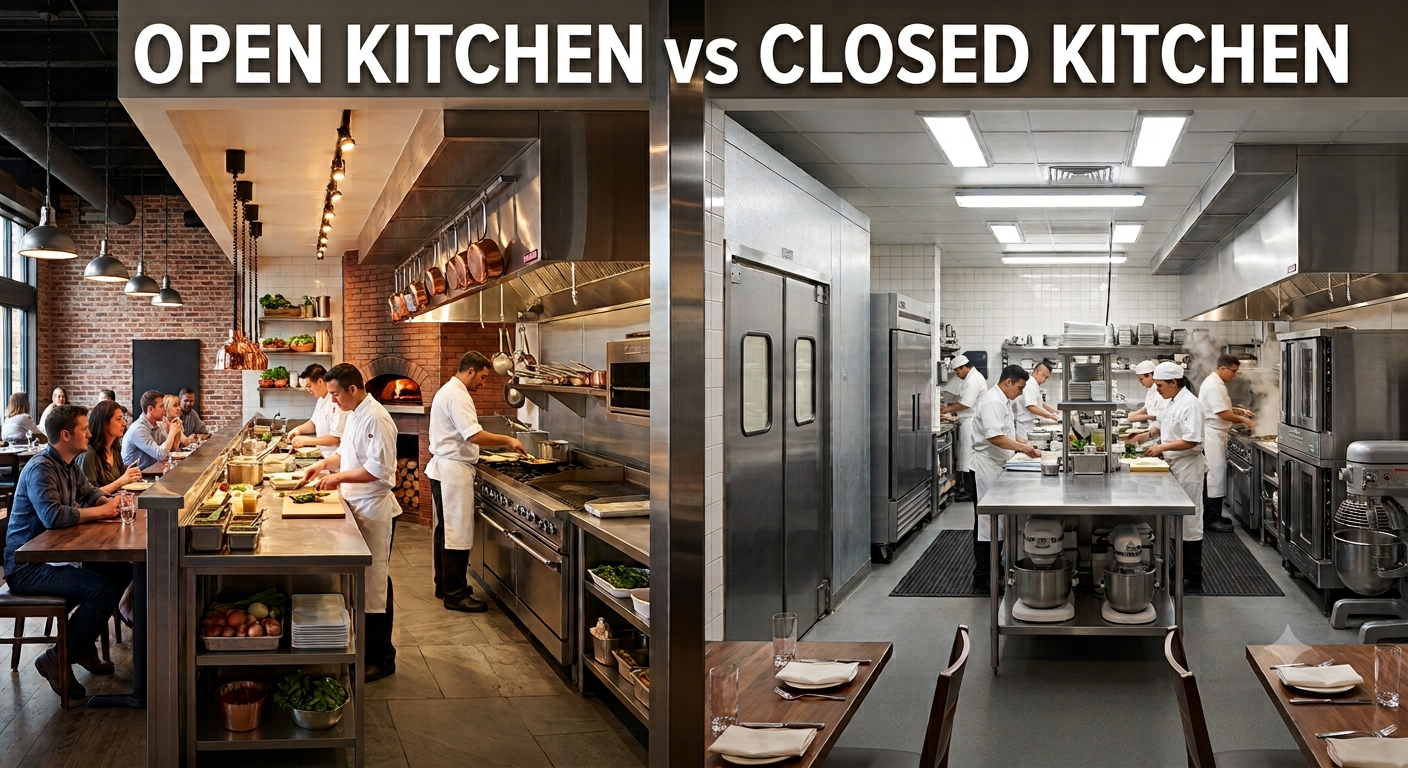
An open kitchen design integrates the food preparation area with the dining space, allowing customers to watch chefs prepare meals in real time. Instead of hiding kitchen operations behind walls, this layout transforms cooking into part of the dining experience.
Open kitchens are commonly found in fine dining restaurants, cafés, bakeries, live grill concepts, and restaurants featuring pizza ovens, sushi bars, or live dosa counters. Many modern Indian restaurants have embraced this approach to build trust, showcase culinary skills, and create a memorable atmosphere.
Beyond aesthetics, an open kitchen encourages greater accountability among staff, as cleanliness, food handling, and preparation techniques remain visible to customers at all times.
What Is a Closed Kitchen?
A closed kitchen design separates the kitchen from customer areas, creating a dedicated workspace focused entirely on food production. Customers only interact with the finished dishes, while all preparation, cooking, storage, and cleaning activities take place behind the scenes.
This layout is widely used in hotels, banquet kitchens, airline catering units, hospitals, corporate cafeterias, and cloud kitchens where operational efficiency takes priority over customer interaction. A closed kitchen provides greater flexibility for organising workstations, equipment, storage areas, and staff movement, making it ideal for businesses managing large order volumes.
Open Kitchen vs Closed Kitchen: Key Differences
Both kitchen layouts offer unique advantages depending on the type of food business. The table below highlights the major differences that business owners should consider before finalizing their restaurant kitchen layout.
| Factor | Open Kitchen | Closed Kitchen |
| Customer Experience | Interactive and engaging | Limited customer interaction |
| Kitchen Workflow | Requires organised and disciplined operations | Easier segregation of cooking and prep areas |
| Space Utilisation | Uses dining space creatively | Offers larger dedicated production areas |
| Food Safety Visibility | Customers can observe hygiene practices | Food preparation remains behind the scenes |
| Ventilation Requirements | Advanced exhaust and ventilation systems required | Easier to control smoke, heat, and odours |
| Operational Efficiency | Best suited for moderate service volumes | Ideal for high-volume food production |
| Maintenance Requirements | Continuous cleaning is essential | Cleaning can be scheduled with minimal customer impact |
| Scalability | Moderate expansion flexibility | Easier to expand kitchen operations as demand grows |
Advantages and Challenges of Open Kitchens
An open kitchen design creates an immersive dining experience while strengthening customer confidence. However, it also requires careful planning to maintain operational excellence.
Benefits
-
Greater Transparency
Customers appreciate seeing how their meals are prepared. Visible cooking processes build confidence in food safety, ingredient quality, and hygiene standards, helping restaurants establish stronger trust with diners.
-
Interactive Dining Experience
Watching chefs prepare food adds entertainment value to the dining experience. Live cooking stations, pizza ovens, and open grills create memorable moments that encourage repeat visits and social media sharing.
-
Strong Brand Differentiation
An open kitchen allows restaurants to showcase craftsmanship and culinary expertise. This visual appeal can become a defining feature of a modern restaurant kitchen design, especially in competitive urban markets.
-
Better Staff Accountability
Since kitchen operations remain visible, staff are more likely to maintain high standards of cleanliness, organization, and professionalism throughout service hours.
Challenges
-
Complex Ventilation Requirements
Smoke, grease, and cooking odours must be managed effectively to maintain a comfortable dining environment. Investing in high-performance ventilation systems is essential.
-
Noise Management
Kitchen equipment, conversations, and cooking activities can contribute to higher noise levels, potentially affecting customer comfort if not properly managed.
-
Higher Cleaning Standards
Every workstation remains visible throughout operating hours. Maintaining spotless counters, equipment, and preparation areas becomes a continuous responsibility.
-
Limited Back-of-House Space
Open kitchens often dedicate more space to presentation than storage, requiring careful planning to optimise equipment placement and workflow.
Advantages and Challenges of Closed Kitchens
A closed kitchen design prioritises efficiency, organisation, and productivity, making it the preferred choice for many commercial food operations.
Benefits
-
Improved Kitchen Workflow
With separate preparation, cooking, washing, and storage zones, staff can move more efficiently without customer interference. This improves overall kitchen workflow design and reduces operational bottlenecks.
-
Better Capacity for High-Volume Production
Hotels, banquet facilities, airline catering, and institutional kitchens require continuous production throughout the day. Closed kitchens provide the space and organisation needed to handle large-scale operations.
-
Increased Storage and Preparation Space
Dedicated storage rooms, cold storage units, prep counters, and utility areas help improve inventory management while supporting efficient food preparation.
-
Easier Equipment Integration
Heavy-duty cooking equipment, refrigeration systems, and utility services can be installed without affecting the restaurant’s dining aesthetics, making this layout ideal for a comprehensive commercial kitchen setup.
Challenges
-
Limited Customer Engagement
Customers cannot observe the cooking process, reducing opportunities to build excitement or showcase culinary expertise.
-
Lower Brand Visibility
Unlike open kitchens, restaurants cannot use food preparation as part of the overall dining experience, making branding dependent on service and food quality alone.
Which Kitchen Design Works Best for Different Food Businesses?
Different businesses have different operational priorities. Choosing the right layout depends on service style, production volume, and customer expectations.
| Business Type | Recommended Design | Why It Works |
| South Indian Restaurant | Hybrid/Open | Live dosa and tawa counters create customer engagement while maintaining separate prep areas. |
| Fine Dining Restaurant | Open | Enhances premium dining through chef interaction and live cooking. |
| Cloud Kitchen | Closed | Focuses on speed, efficiency, and delivery operations. |
| Hotel Kitchen | Closed/Hybrid | Supports multiple cuisines and high-volume production. |
| Café | Open | Creates a welcoming atmosphere and highlights beverage preparation. |
| Corporate Cafeteria | Closed | Prioritises efficiency, consistency, and large-scale meal production. |
| Airline Catering | Closed | Meets strict hygiene, safety, and operational requirements. |
Key Factors to Consider Before Choosing a Kitchen Design
Before deciding between an open or closed kitchen, evaluate your business requirements carefully.
-
Cuisine Type
Certain cuisines involve heavy frying, grilling, or high-heat cooking, making a closed kitchen more practical. Others, such as bakery, pizza, or live grilling concepts, naturally benefit from an open layout.
-
Service Style
Fine dining restaurants often prioritise customer engagement, while quick-service restaurants, institutional kitchens, and delivery-focused businesses require maximum operational efficiency.
-
Available Space
Smaller premises may require creative kitchen layout planning to balance seating capacity with kitchen functionality. Larger facilities offer greater flexibility for dedicated preparation and storage areas.
-
Budget
Construction costs vary depending on ventilation systems, equipment integration, and interior finishes. Choosing the right commercial kitchen design should balance operational efficiency with long-term return on investment.
-
Ventilation and Safety Requirements
Proper exhaust systems, air circulation, and fire safety measures are essential regardless of the chosen layout. Compliance with food safety regulations should always be a priority.
-
Future Expansion Plans
As your business grows, your kitchen should be able to accommodate increased production, additional equipment, and evolving menu requirements. Thoughtful restaurant kitchen planning ensures your facility remains efficient for years to come.
Conclusion
The choice between an open kitchen vs closed kitchen ultimately comes down to how you want your business to operate and the experience you want to deliver. While open kitchens bring customers closer to the culinary process, closed kitchens excel at supporting speed, consistency, and large-scale production. Neither layout is inherently better. The most effective solution is the one that aligns with your menu, service style, available space, and long-term business goals.
A thoughtfully planned commercial kitchen design goes beyond aesthetics; it creates a workspace that improves efficiency, supports your team, and adapts as your business grows. Whether you’re launching a new restaurant, renovating an existing kitchen, or developing a large-scale food service facility, expert planning can make all the difference. At Alister, we specialize in designing tailored commercial kitchen solutions that combine functionality, compliance, and operational excellence. From restaurant kitchen planning and workflow optimization to complete turnkey kitchen solutions, our team helps businesses create kitchens that are built to perform today and scale for the future.
FAQs
1. What is a hybrid kitchen design?
A hybrid kitchen design combines elements of both open and closed kitchens. It typically features a customer-facing live cooking or display area while keeping food preparation, storage, and cleaning activities in a separate back-of-house space. This layout offers a balance between customer engagement and operational efficiency.
2. How does kitchen design affect staff productivity?
A well-designed kitchen minimizes unnecessary movement, improves communication between staff, and creates dedicated work zones for food preparation, cooking, and cleaning. An efficient layout can reduce service delays, enhance productivity, and improve overall kitchen performance.
3. Are there specific ventilation requirements for commercial kitchens?
Yes. Commercial kitchens must be equipped with appropriate exhaust hoods, ducting, fresh air systems, and fire safety measures to remove heat, smoke, grease, and cooking odours. Ventilation requirements vary depending on the type of cuisine, cooking equipment, and local regulations.
4. How often should a restaurant kitchen layout be reviewed or upgraded?
Restaurant owners should evaluate their kitchen layout whenever they expand their menu, introduce new equipment, increase seating capacity, or experience workflow bottlenecks. Periodic assessments help ensure the kitchen continues to support efficient operations as the business grows.
5. What are the common mistakes to avoid when planning a commercial kitchen?
Some common mistakes include underestimating storage requirements, overlooking staff workflow, choosing equipment without considering available space, neglecting ventilation planning, and failing to account for future business expansion. Working with experienced kitchen design professionals can help avoid costly redesigns.
6. Why should businesses invest in professional commercial kitchen planning?
Professional kitchen planning helps optimise available space, improve workflow, ensure compliance with food safety standards, and select the right equipment for your operations. It also reduces the risk of costly modifications in the future and creates a kitchen that supports long-term business growth.