
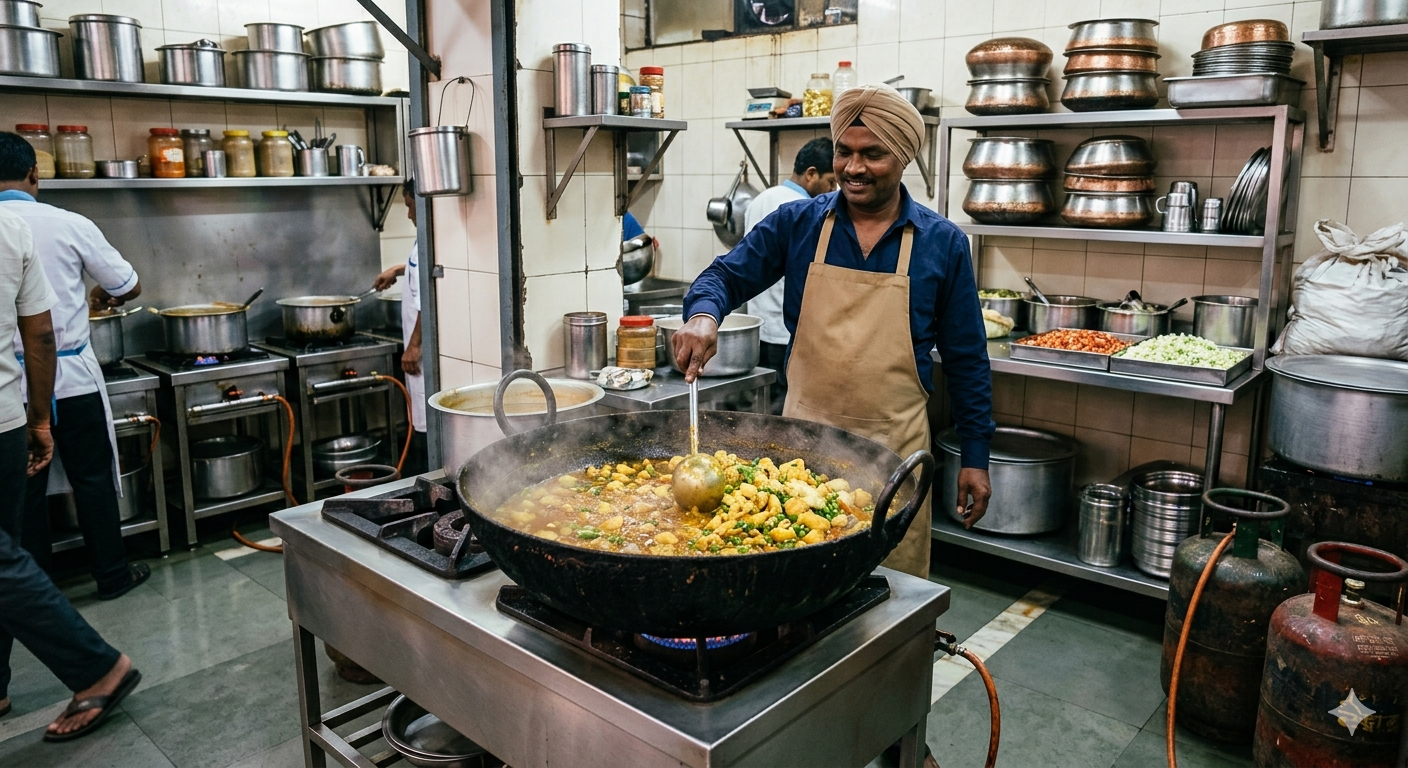
Great food is only half the battle in large-scale catering. When the guest list grows, the kitchen becomes a race against the clock where every movement needs to count. At this level, success is less about individual effort and more about the strength of the system supporting the team.
To serve hundreds of people without losing momentum, your workspace needs to be built for endurance. It requires a layout where the tools are as reliable as the hands using them, ensuring that speed and quality work together.
This guide highlights the essential equipment for high-volume catering kitchens, providing a complete catering kitchen equipment checklist to help you build a kitchen that stays steady, efficient, and ready for any demand.
Bulk Cooking Equipment
The hot kitchen is the engine of your catering business. These units are essential in large scale kitchen equipment in India for managing high-volume cooking across diverse menus.
- Commercial Gas & Bulk Cooking Ranges: These form the core of a high-volume kitchen. Designed for continuous commercial use, high-BTU burners help heat large stock pots quickly while supporting bulk cooking, heavy-duty sautéing, and fast-paced food preparation during peak operations.
- Tandoors: For authentic catering, a high-capacity tandoor is vital. Whether stainless steel or traditional clay-lined, these units must maintain extreme temperatures to churn out breads and roasted meats consistently.
- Commercial Ovens: Industrial convection or deck ovens allow for uniform cooking of bulk batches. From roasting proteins to finishing appetizers, an oven with precise temperature control ensures the hundredth serving is as perfect as the first.
- Bratt Pans: Highly versatile for large scale commercial cooking, bratt pans are ideal for frying, braising, simmering, grilling, and preparing gravies or bulk curries efficiently in a single unit.
- Boiling Pans: Designed for high-volume kitchens, boiling pans are commonly used for soups, sauces, rice, pasta, and stock preparation, helping kitchens manage bulk cooking while maintaining consistent quality.
Food Preparation Equipment
Efficiency in a high-volume environment is determined during the prep phase. Using large capacity kitchen equipment for preparation reduces manual labor and ensures uniformity across all dishes.
- Stainless Steel Work Tables:Sturdy, food-grade surfaces are mandatory. These provide the necessary space for organized assembly lines and heavy prep work while meeting strict hygiene standards.
- Vegetable Cutting Machines: Manual chopping is a bottleneck in large operations. Industrial slicers and dicers can process bulk quantities of produce in minutes, ensuring consistent sizes for even cooking.
- Commercial Mixers and Grinders: From heavy batters to fresh spice pastes, high-torque grinders and mixers are designed to run for extended periods without the motor fatigue common in smaller models.
- Dough Kneaders: For any kitchen serving fresh breads or rotis, a dedicated kneader is essential. It handles massive batches of dough with ease, ensuring a perfect, consistent texture every time and saving your team from hours of manual labor.
Refrigeration & Storage
In a high-volume kitchen, food safety and ingredient freshness are paramount. Your catering kitchen setup equipment must include a tiered cooling strategy to handle bulk inventory.
- Commercial Refrigerators: Reach-in units allow for the organized storage of daily perishables, keeping ingredients within easy reach of the prep team.
- Deep Freezers: These are necessary for the long-term storage of bulk proteins and frozen stocks, helping you manage inventory costs effectively.
- Undercounter Chillers: By placing refrigeration directly beneath prep stations, you minimize the movement of staff, keeping temperature-sensitive items cold until the exact moment they are needed.
- Cold Rooms: Essential for large-scale kitchens handling high inventory volumes, offering dedicated temperature-controlled storage for fresh produce, dairy, meat, and beverages.
Serving & Buffet Setup
The final stage of catering is the transition to the guest. The right serving equipment ensures that the food prepared with such effort arrives at the table at the perfect temperature and texture.
- Bain-marie Counters: These are the gold standard for buffet service. By using a gentle water bath, they keep gravies, lentils, and sauces hot without burning or drying them out.
- Hot Plates: Essential for keeping appetizers or breads warm at live counters, providing a professional presentation for guests.
- Juice Dispensers: In a high-traffic environment, self-service or rapid-pour dispensers are vital. These units keep beverages perfectly chilled and allow for quick service, preventing bottlenecks at the refreshment station.
- Hot Beverage Dispensers: From tea to coffee, dedicated dispensers ensure a consistent temperature and portion size. They eliminate the need for individual brewing during service peaks, keeping the queue moving smoothly.
Washing & Cleaning Equipment
The faster the kitchen moves, the faster the dishes pile up. A streamlined cleaning station is the only way to keep the kitchen from grinding to a halt.
- Three-Compartment Sinks: A dedicated setup for washing, rinsing, and sanitizing is necessary for oversized pots and bulk cooking vessels that cannot fit into standard machines.
- Commercial Dishwashers: High-speed hood or conveyor-type dishwashers are critical for cycling through plates and cutlery, ensuring a steady supply of clean service ware throughout the event.
- Glass Washer Undercounter: Glassware is fragile and high-turnover. A dedicated undercounter glass washer uses specialized cycles to remove lipstick and smudge marks without the risk of breakage, keeping the bar and beverage stations running without a hitch.
Ventilation
A high-production kitchen generates significant heat, smoke, and steam. Without industrial-grade ventilation, the workspace quickly becomes hazardous and uncomfortable.
- Exhaust Hoods: Professional-grade hoods draw out grease-laden air and heat, maintaining a breathable environment and preventing grease from settling on your expensive equipment.
Why Partner with Alister?
At Alister, we bring together the world’s most trusted brands with our own expertise in manufacturing to give you a setup you can actually rely on. We don’t just provide machines; we provide a foundation. Because we understand how equipment is built from the ground up, we make sure every piece that enters your kitchen is sturdy, dependable, and ready for years of hard work.
We also know that your space and your menu are unique. A standard, “off-the-shelf” setup rarely works for a team that has their own way of doing things. That’s why we focus on personalizing our equipment to fit your specific layout and style of cooking. We bridge the gap between global quality and custom-made solutions, handling the heavy details so you can stay focused on the art of feeding people.
Conclusion
Building a high-capacity kitchen is an investment in the future of your catering business. By focusing on essential equipment for high-volume catering kitchens, you create a workspace that supports your team rather than slowing them down. From the initial prep to the final serving line, each component must be chosen for its durability and its ability to perform under the rigors of industrial use.
At Alister, we specialize in providing the high-performance equipment needed to power these demanding environments. While we provide expert guidance on equipment selection and kitchen layouts to maximize your workflow, we focus on ensuring you have the most reliable tools for the job. Investing in the right setup today ensures that your catering business can handle the growth of tomorrow.