
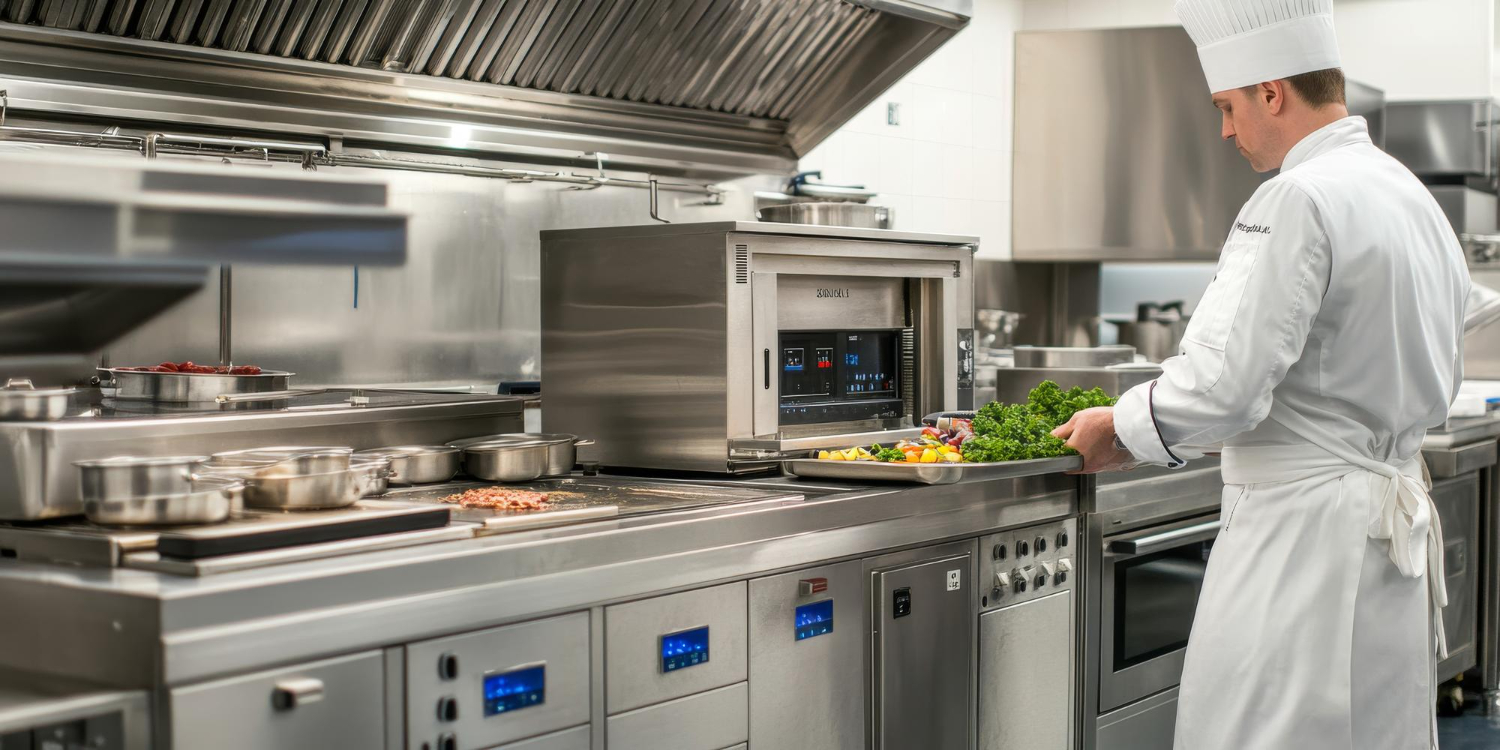
India’s foodservice industry in 2026 is evolving at an unprecedented pace. Cloud kitchens are multiplying across cities, quick‑service restaurants are expanding into new formats, and premium dining experiences are setting higher expectations for quality and efficiency. In this landscape, the kitchen is no longer just a place to cook, it’s a performance engine where equipment choices directly shape speed, safety, and profitability.
The latest commercial kitchen equipment trends in India highlight this shift. Compact, multi‑functional designs are helping operators maximize space in high‑rent urban locations. Energy‑efficient systems are reducing utility costs while aligning with sustainability goals. Automation is streamlining prep work, cutting labor hours, and ensuring consistency across diverse menus. Together, these innovations are redefining what a modern equipped commercial kitchen must deliver – not only to meet demand today but to stay competitive in the years ahead.
1. Smart & Automated Kitchen Equipment
Consistency is shifting from being chef-dependent to system-driven. Automated fryers, programmable ovens, and sensor-based cooking equipment are allowing kitchens to deliver identical results regardless of staff experience or service pressure.
This trend is gaining momentum as food businesses expand across multiple locations and formats. Automation reduces variability, controls portioning, and stabilizes output during peak hours. Over time, these systems are becoming central to quality assurance rather than optional upgrades, enabling kitchens to scale without compromising brand standards.
2. Energy-Efficient Solutions
Energy efficiency is evolving into a measurable operational KPI. Rising electricity tariffs and water costs are pushing kitchens to adopt induction cooking, high-efficiency refrigeration, and optimized washing systems that reduce resource consumption without slowing service.
Operators are now evaluating equipment based on lifetime energy performance rather than upfront cost alone. This trend reflects a broader shift toward disciplined, data-aware kitchen management, where sustainability decisions directly influence margins and long-term viability.
3. Multi-Functional & Space-Saving Designs
The value of kitchen space is being redefined by productivity rather than size. Multi-functional equipment, modular cooking stations, and flexible layouts allow kitchens to produce more within tighter footprints.
This trend is especially visible in urban locations, cloud kitchens, and high-rent environments where expansion is not an option. Equipment is increasingly designed to adapt to changing menus and service models, making flexibility a critical factor in long-term kitchen planning.
4. Hygiene & Safety Innovations
Hygiene is transitioning from manual enforcement to built-in design. Equipment with anti-microbial surfaces, touchless controls, and integrated sterilization systems reduces the need for constant monitoring while maintaining safety standards.
This trend reflects heightened regulatory expectations and greater consumer awareness around food safety. By embedding hygiene into infrastructure, kitchens are able to maintain consistency, reduce risk, and simplify compliance across daily operations.
5. Cloud & Ghost Kitchen Adaptations
Delivery-first models are reshaping how commercial kitchens prioritize equipment. Speed, compact workflows, and repeatable performance take precedence over traditional dine-in requirements.
Rapid-cook ovens, streamlined prep systems, and equipment optimized for parallel production support high order volumes with minimal friction. This trend continues to influence kitchen design, encouraging investment in scalable setups that can adapt quickly to demand spikes and menu changes.
6. IoT & Connected Kitchens
The rise of connected kitchens signals a shift toward data-led decision-making. IoT-enabled equipment captures insights on usage patterns, energy consumption, and maintenance cycles, allowing operators to anticipate issues before they disrupt service.
Predictive maintenance reduces downtime and extends equipment life, while system integration improves coordination between order flow and food preparation. Connectivity is increasingly viewed as an operational safeguard rather than a technological add-on.
7. Compliance & Ergonomics
Compliance and ergonomics are influencing kitchen design at the planning stage rather than as post-installation considerations. Fire safety features, FSSAI-aligned hygiene protocols, and ergonomic workstations are shaping how kitchens are structured from the outset.
This trend reflects a growing recognition of staff well-being as a productivity driver. Well-designed kitchens reduce fatigue, improve workflow efficiency, and support safer, more sustainable operations over time.
Conclusion
Taken together, the commercial kitchen landscape in India is moving toward systems that prioritise consistency, efficiency, and long-term adaptability. As kitchens respond to higher volumes, tighter regulations, and evolving service models, investing in modern commercial kitchen equipment in India becomes a strategic foundation rather than a short-term upgrade. The choices made today directly influence operational stability, scalability, and the ability to meet future demands without disruption.
As a manufacturer and supplier serving food businesses across India, Alister supports this transition by delivering equipment built for real-world kitchen environments. With a strong focus on engineering, reliability, and practical design, Alister helps operators align with emerging professional kitchen equipment trends, enabling kitchens that perform efficiently today while remaining resilient and future-ready.